


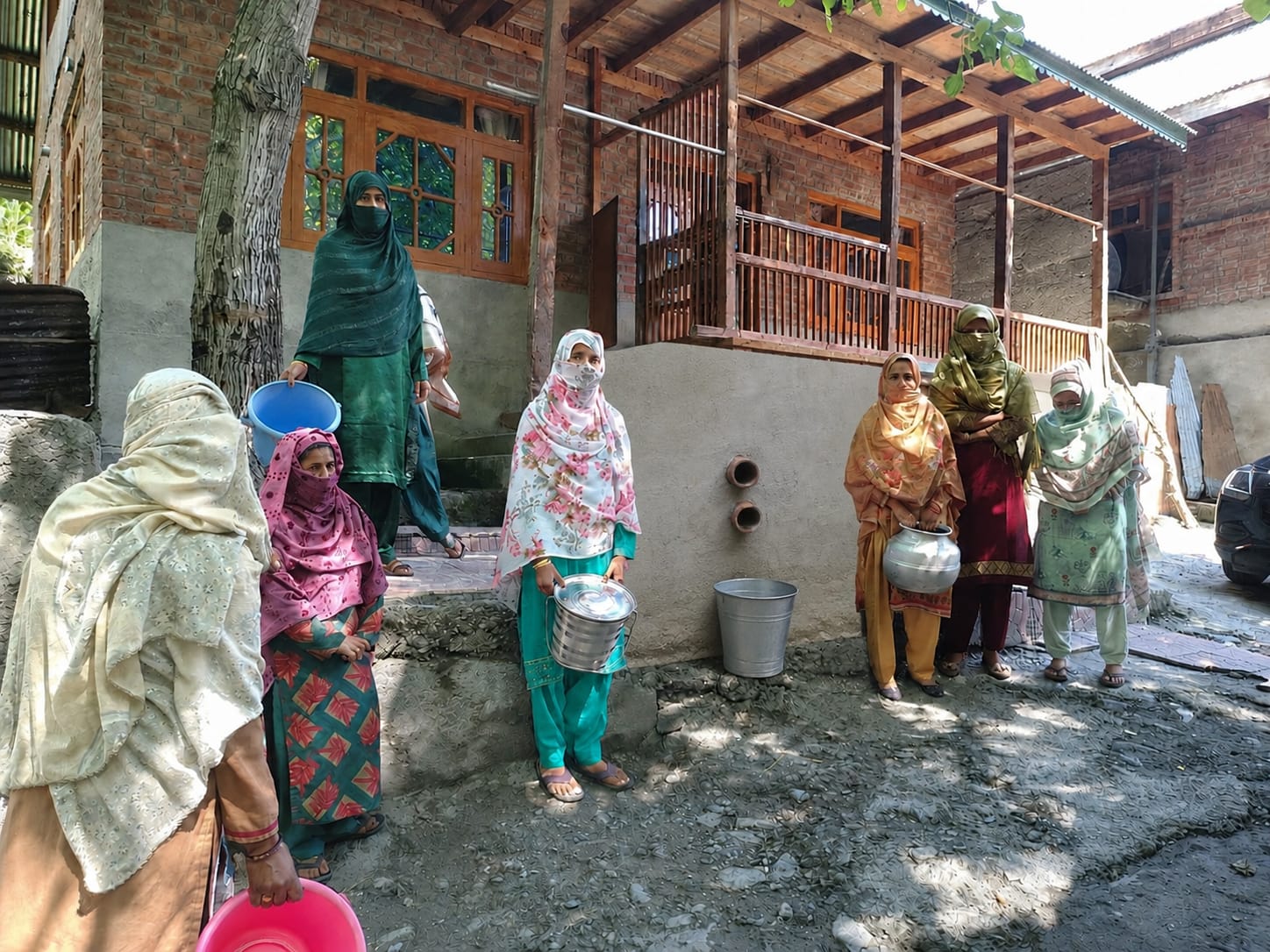


Karnah, July 6 (JKNS): There was a time when almost every village in the border subdivision of Karnah in north Kashmir had several natural springs that served as the primary source of clean drinking water for local residents. These springs not only met the daily water needs of the people but also formed an important part of the region’s natural beauty and ecological balance. However, over the years, most of these springs have either dried up completely or become polluted, rendering them unsafe for use.
According to local residents, climate change, unplanned construction, deforestation, the declining groundwater table, and the negligence of the concerned departments have contributed significantly to the rapid disappearance of these natural water sources. In many villages, people are now forced to travel long distances every day in search of clean drinking water, with women, elderly people, and school-going children bearing the greatest burden.
Residents say that even the springs that still exist have become contaminated due to the lack of proper maintenance, protection, and regular cleaning. This has increased the risk of waterborne diseases and created serious public health concerns. Villagers recall that in the past, these springs supplied water to entire communities, but today their very existence is under threat.
Environmental experts and social activists have expressed deep concern over the situation, warning that unless immediate and effective measures are taken to protect these natural water resources, the region could face an even more severe water crisis in the coming years. They stressed the need for a comprehensive plan focusing on spring restoration, cleanliness around water sources, afforestation, and the removal of illegal encroachments.
Local residents have urged the District Administration and the Jal Shakti Department to launch a special initiative for the restoration of Karnah’s dried and polluted springs, ensure the protection of natural water sources, and provide a reliable supply of safe drinking water to rural communities so that this precious natural heritage can be preserved for future generations.
Elderly residents recall that villages such as Suliman, Dildar, Bhatpora, Hajinar, and several others once had numerous natural springs with crystal-clear, sweet water. These springs served not only as the primary source of drinking water but also met the needs of livestock, agriculture, and other household activities. Sadly, most of these springs have now either dried up completely or are gradually disappearing, while many of the remaining ones have become polluted due to neglect and poor maintenance. Locals say that places where freshwater once flowed abundantly now show no visible trace of these springs, further worsening the water crisis across the region. (JKNS)

“We Must Take Kashmir’s Spiritual Legacy to the World”: Dr Darakhshan Andrabi
Chrar-e-Sharief, Oct 22 (JKNS): Jammu and Kashmir Waqf Board Chairperson Dr Syed Darakhshan Andrabi on Thursday highlighted the global significance...
Read more