


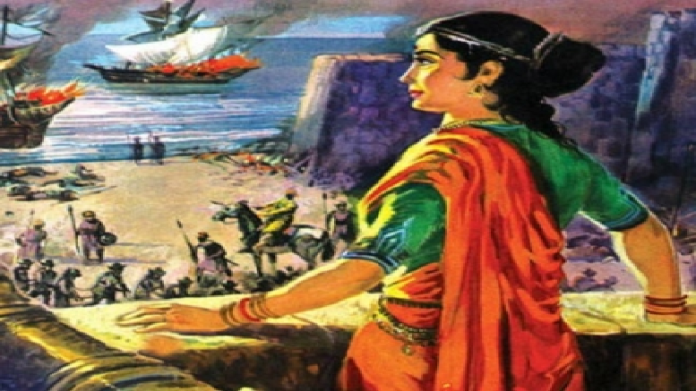
The legacy of Sultana Kota Rani, one of Kashmir’s most remarkable historical figures, has been explored in great depth by renowned scholar and author Khawaja Farooq Renzushah. His latest research, conducted at the esteemed Renaissance Cultural Center in Michigan, presents a comprehensive study of this pioneering queen who played a crucial role in shaping Kashmir’s cultural and political landscape.
Renzushah’s book has garnered significant attention from scholars and writers worldwide, resonating across Hindu, Muslim, and Buddhist communities. The work highlights how Kota Rani embodied the spirit of Kashmir’s syncretic culture—what is today known as Kashmiriyat. It underscores her unwavering commitment to unity and religious coexistence, which set a precedent for secularism long before the term was formally coined in the West.


Renzushah’s Literary Contributions
With a prolific literary career spanning decades, Khawaja Farooq Renzushah has authored 22 books. His journey in literature began in 1977 with Doobtay Kinaray, which was praised by the legendary literary critic Aal Ahmad Saroor. His latest work on Sultana Kota Rani cements his position as a historian dedicated to unearthing the untold stories of Kashmir’s past.
The book portrays Kota Rani as a symbol of resilience, a queen who valiantly defended Kashmir from Mongol invasions, particularly against Zulju (Zulqader Khan). She is depicted as a leader who not only protected the region’s sovereignty but also safeguarded its composite culture from external aggression.
Sultana Kota Rani: A Beacon of Kashmir’s Renaissance
Renzushah positions Kota Rani as a pioneer of Renaissance thought, long before the European Renaissance took shape. She is likened to revered Kashmiri figures such as Nund Reshi and Lal Ded, whose legacies are cherished by both Hindus and Muslims. Her deep spiritual inclination led her to be called Qutub Rani, a title reflecting her status as a spiritual guide and scholar.
The book delves into her efforts to maintain religious harmony, particularly by fostering unity among Hindus, Buddhists, and Muslims. Historical accounts suggest that Bulbul Shah, an influential Sufi saint, allowed her to continue practicing her Reshi faith while governing as Queen Regent after the assassination of Sultan Sadruddin.
The Struggle Against Religious Intolerance
The research also sheds light on the turbulent period following Kota Rani’s reign, particularly the rule of Sultan Sikandar and his minister Suha Bhatta, who imposed a reign of religious intolerance. Renzushah details the mass killings and forced conversions that took place, describing how Kashmir’s syncretic traditions were nearly erased during this period.
However, the book also highlights how Sikandar’s own son, Zain-ul-Abidin (Budshah), later rebelled against this legacy of bigotry. He worked to restore Kashmir’s pluralistic culture by reviving religious institutions, including the flood channels known as Kota Kuls, which were originally developed during Kota Rani’s time.
The Importance of Sharda Peeth
A significant portion of the book is dedicated to Sharda Peeth, an ancient center of learning that once stood as a beacon of knowledge in Kashmir. Renzushah argues that Sharda Peeth was the world’s first university of wisdom, predating Taxila and Nalanda. He laments its destruction by Sultan Sikandar and later, its further desecration by the Pakistani Army, which allegedly repurposed its ruins for military infrastructure.
The book calls for the revival of Sharda Peeth as a symbol of Kashmir’s intellectual heritage, urging authorities to restore the historic site and recognize its significance in world history.
A Global Impact
The book has received widespread appreciation on social media platforms such as X (formerly Twitter), Instagram, TikTok, and Facebook. Thousands of readers have engaged with Renzushah’s work, expressing admiration for his efforts to shed light on a lesser-known yet crucial chapter of Kashmir’s history.
The research has also been acknowledged by Renaissance scholars in Michigan, who recognize Kota Rani as a trailblazer of secular and humanistic values. This international recognition affirms that her legacy extends beyond Kashmir, offering a universal message of religious harmony and resilience.
Conclusion
Renzushah’s book on Sultana Kota Rani is a groundbreaking contribution to Kashmir’s historical literature. It challenges conventional narratives and brings to light the story of a queen who stood for unity, wisdom, and resistance against tyranny. By framing her as a pioneer of Renaissance thought, the book not only restores her rightful place in history but also serves as an inspiration for those who continue to advocate for a pluralistic and inclusive society.
In a time when history is often rewritten to serve political agendas, works like this are crucial in preserving the truth. Sultana Kota Rani: Reshi Queen of Kashmir is not just a tribute to an extraordinary ruler but a testament to the enduring spirit of Kashmir’s composite culture.