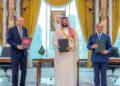


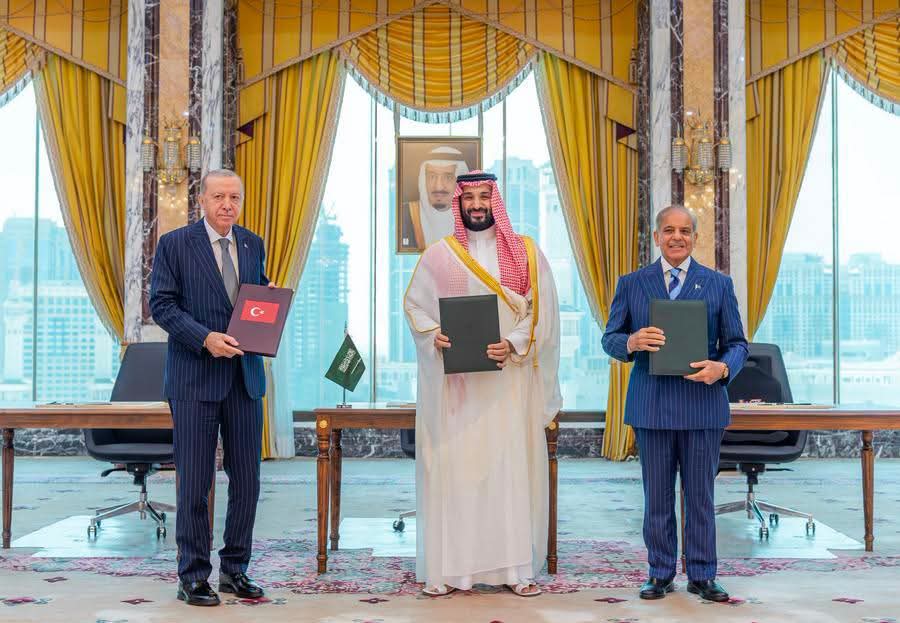
Neither the text of the Mecca Joint Defence Agreement nor the statements of its members name Iran as an adversary. The members describe the pact as defensive, although its first activation concerned Houthi attacks on Saudi Arabia, and the Houthis are Iran-aligned. The agreement commits Saudi Arabia, Pakistan and Turkey to strengthen collective deterrence against any act of aggression and treats an armed attack on one as an attack on all, mirroring a central provision of NATO’s founding treaty. It names no threat.

Pakistan’s Foreign Ministry spokesman, Sajjad Haider Khan, said on 10 September that the agreement is a defensive alliance with no plans for expansion. Turkey’s defence ministry said the pact was open to expansion, with Egypt named as a potential candidate, and did not seek to replace any existing alliance. After the 5 October meeting, Saudi Defence Minister Prince Khalid bin Salman spoke of solidarity in confronting heinous attacks against the kingdom and its holy sites. The joint statement condemned attacks on Saudi Arabia, in particular those aimed at Mecca and Medina, without naming the Houthis.
Iran’s response has come in two registers. Foreign Ministry spokesman Esmaeil Baghaei said on 4 October that Tehran hoped reports of a Pakistani deployment for war in Yemen were untrue. Foreign Minister Abbas Araghchi, without naming the pact, called for self-reliance and genuine brotherhood among neighbours and said such agreements would not constrain Iran. Iran International reported that Tasnim described the development as Turkey and Pakistan joining the Saudi war against the Yemeni people, and that Nour News, which it described as close to the Supreme National Security Council, asked whether the alliance was in fact one against the people of Yemen.
Iranian analysts draw a line between defending Saudi territory and infrastructure and attacking the Houthis. Javad Heiran-Nia of the Persian Gulf Studies Group in Tehran says a deployment limited to protecting Saudi installations can be tolerated, while offensive operations against the Houthis cannot.
Outside analysts read the pact in several ways. Abdulaziz Alghashian of the Gulf International Forum says the Houthi attacks hastened the alliance and inspired it. Others note that Turkey and Pakistan continue to hedge in their relations with Tehran by providing it with economic and diplomatic support. President Donald Trump reportedly welcomed the pact as an example of greater burden-sharing in the region. Analysts also judged in September that Turkey and Pakistan were unlikely to intervene despite the terms of the deal, a limitation that could reduce its deterrent effect.
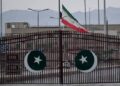
Pakistan’s own conduct in the same weeks fits a state that does not regard the pact as aimed at Tehran, or wishes to be seen that way. On 5 August, Pakistan and Iran agreed to keep border crossings open round the clock, and on 6 August Pakistan’s power minister discussed a second electricity transmission line with Iranian officials. Pakistan has continued its mediation between Washington and Tehran even as Iran International reports that Tehran is questioning the role.
A defence treaty needs a trigger, and the one invoked on 5 October was an Iran-backed Yemeni militia. The pact therefore touches Iranian interests without naming Iran. Whether that is an accident of drafting or a deliberate choice is not stated. Nor is what the three states would do if Iran itself attacked Saudi Arabia, although when Iran struck Saudi energy infrastructure in the spring, Pakistan deployed fighter jets and support aircraft to the kingdom under the earlier bilateral treaty, Reuters reported.