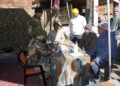



In regions where geography dictates the limits of accessibility, the delivery of essential services particularly healthcare often becomes a formidable challenge. The remote sector of Tangdhar in Jammu and Kashmir exemplifies such a setting, where harsh terrain, climatic constraints and limited infrastructure collectively restrict access to specialized medical care. Against this backdrop, a four-day Eye, Medical and Dental Camp conducted from 24 to 27 March 2026.
Organized by Field Hospital under the aegis of Army, in collaboration with Base Hospital, Srinagar, the camp was designed to address critical healthcare gaps among serving personnel, their dependents, ex-servicemen and the local civilian population. The initiative reflects a structured and strategic approach to humanitarian assistance, combining medical expertise with operational efficiency.
From the outset, the camp was conceived not merely as a routine medical exercise, but as a comprehensive intervention aimed at delivering specialized care in a resource-constrained environment. Over the course of four days, it offered a wide spectrum of services, including ophthalmic screening, cataract identification and surgery, general medical consultations, dental care and a voluntary blood donation drive. The inclusion of both diagnostic and surgical components ensured continuity of care—an aspect often missing in short-term outreach programs.
A defining feature of the camp was its robust ophthalmic care segment. Eye health, particularly in remote populations, is frequently neglected due to the absence of specialists and diagnostic facilities. During the camp, 528 individuals underwent detailed eye examinations, leading to the identification of 158 cases requiring further surgical management. Notably, 19 cataract surgeries were successfully performed on-site, restoring vision and significantly improving functional independence for the beneficiaries. The surgical component was led by Base Hospital, whose leadership ensured adherence to clinical standards despite the challenging conditions.
Parallel to this, the Medical OPD catered to 386 patients, addressing a range of health concerns from acute ailments to chronic conditions. The consultations also served as an opportunity for preventive healthcare education—an often overlooked but critical element in improving long-term community health outcomes. Similarly, the Dental OPD provided services to 238 individuals, delivering both treatment and awareness on oral hygiene practices in an area where dental care infrastructure is minimal.
The blood donation drive, an integral component of the camp, yielded 48 units of blood through voluntary contributions from both military personnel and civilians. This initiative not only strengthens medical preparedness but also reflects a growing culture of shared civic responsibility within the region. Such participation underscores the effectiveness of community engagement strategies embedded within Operation Sadbhavana.
In aggregate, the camp reached 1,152 beneficiaries—a figure that underscores both the scale of unmet healthcare needs and the success of the initiative in addressing them. The high turnout is indicative of the trust reposed by the local population in such interventions, as well as the operational credibility of the organizing institutions.
The camp also drew attention from senior military leadership and visiting medical specialists, whose presence served to reinforce the importance of sustained outreach in sensitive and underserved areas. Their engagement provided both strategic oversight and morale support to the teams working under demanding field conditions.
Beyond the immediate clinical outcomes, the Tangdhar camp holds broader significance in the context of civil-military relations. Operation Sadbhavana, under which the initiative was conducted, is fundamentally oriented toward fostering goodwill and strengthening ties between the armed forces and civilian communities. By addressing tangible needs such as healthcare, the program transcends symbolic engagement and establishes a foundation of trust and mutual respect.
From a policy and planning perspective, the camp offers valuable insights into the design and execution of effective outreach models. Its success can be attributed to coordinated inter-institutional collaboration, meticulous planning and the deployment of specialized medical teams equipped to operate in austere environments. The integration of screening, surgical intervention and follow-up care further enhances its replicability as a model for similar regions.
In conclusion, the Eye, Medical and Dental Camp at Tangdhar stands as a well-executed example of targeted humanitarian intervention. It demonstrates that with strategic intent, professional expertise and coordinated effort, it is possible to deliver high-quality healthcare even in the most challenging settings. More importantly, it reinforces the idea that outreach initiatives, when thoughtfully designed, can serve as catalysts for both community welfare and institutional trust-building.
As healthcare disparities continue to define remote geographies, such models warrant sustained attention and periodic replication. The Tangdhar initiative not only addressed immediate medical needs but also set a benchmark for future engagements—one that aligns operational capability with humanitarian responsibility.
Kashmir’s Rising Cricket Star: Ulfat Sikander Makes Her Mark at Under-19 Level
Advocate Safa From the quiet lanes of Kathpora Hajin in Bandipora district to the national Under-19 cricket platform, Ulfat Sikander’s...
Read more