


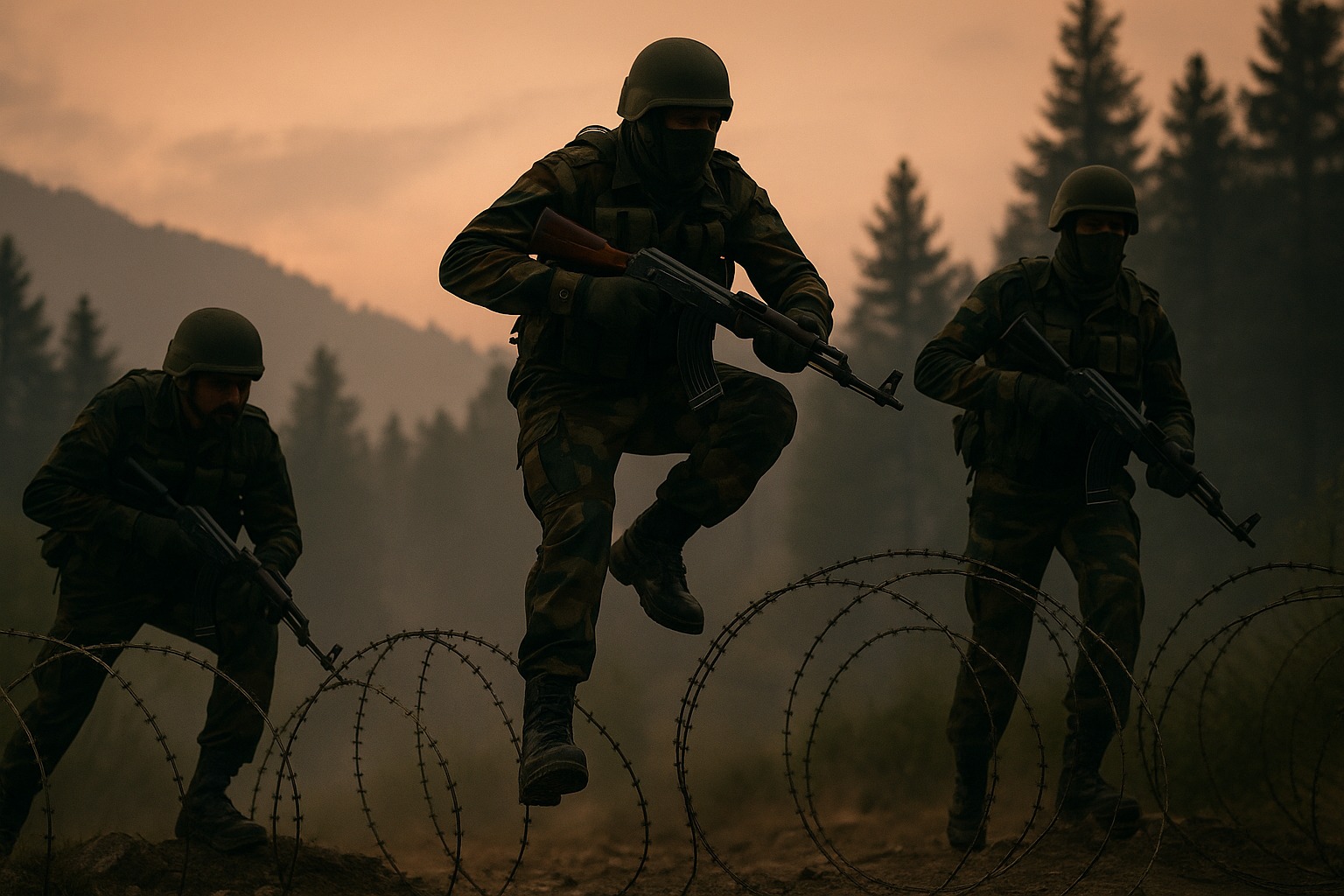
The killing of 17 Indian soldiers in a terrorist attack on the Uri army base in the wee hours of September 19, 2016, enraged the entire nation. The Indian Army responded by conducting “Surgical Strikes” and destroying terror launchpads and the terrorists present there, waiting to infiltrate into the Indian side.
Following the Uri attack, the Indian Army strengthened its counter-infiltration grid. The Indian Army has adopted a robust counter-infiltration strategy, which has an appropriate mix of technology and human resources put together to check infiltration effectively.
The Army, along with the various Defence Research & Development Organisation (DRDO) laboratories, is regularly upgrading the design of Anti Infiltration Obstacle System (AIOS) on the fence to incorporate ‘Smart’ components such as Border Surveillance System (BOSS), Laser Fence, Short Range Surveillance Equipment, etc.
Innovative troop deployment, proactive use of surveillance and monitoring devices. Along with the existing AIOS, they have enhanced the ability to detect and intercept terrorists attempting to infiltrate/exfiltrate. On the basis of regular analysis of threat assessment and past infiltration attempts, drills and procedures are modified to counter emerging threats.
The Army has also implemented a three-layered approach involving surveillance technology, an obstacle system, and ground troops. This strategy, which incorporates enhanced surveillance tools such as radars, thermal imaging, and UAVs, along with obstacles and patrols, aims to achieve and maintain a zero infiltration grid along the Line of Control (LoC).
The first one is Surveillance Layer, under which the Army is using a plethora of surveillance equipment, including radars, various thermal imaging sites, weapon and helmet-mounted sites, along with Unmanned Aerial Vehicles (UAVs).
Radar and thermal imaging sites help in detecting movement, while weapon and helmet-mounted sites assist in localised surveillance. (UAVs) and drones for aerial monitoring. Closed-circuit television (CCTV) and Pan-Tilt-Zoom (PTZ) cameras are used to monitor vulnerable areas, while underground sensors are used for detecting surface and subsurface movement.
The second is the Obstacle System Layer. It consists of a comprehensive obstacle system designed to impede infiltration, which includes various types of mines placed throughout the border area. Then there are optical systems meant to enhance detection and blockage.
The third one is the Troop Deployment Layer. This is the final layer, which involves the proactive deployment of troops on the ground to dominate the area. It involves routine patrols and ambushes, conducted to physically control the territory. Further, area dominance is maintained through observation and firepower.
The Army has further set up the Smart Fence System that enhances border security and surveillance. It has also introduced new modern equipment, including Quadcopters, advanced surveillance tools, bulletproof vehicles, all-terrain vehicles, modern weapons, and night vision devices.
But as the Pahalgam attack showed, loopholes continue to be there because of the vast and porous mountainous terrain that exists along the LoC. The Army, the various other security agencies, corporates, the DRDO labs and the civilian government have brainstormed to plug these gaps. We have to be more proactive than reactive. We have to neutralise the threat before it enters our space to minimise the damage. Although the Prime Minister has declared that any future terror attack of Pahalgam magnitude will be considered as an act of war, we can’t go to war after every terror attack.
War is a costly and dangerous action. Nearly two billion people reside in the Indian sub-continent, and both India and Pakistan are nuclear powers. Pakistan does not believe in any ethics or rules of engagement. We have a second use policy regarding nuclear weapons, not Pakistan. Till Pakistan exists on earth, it will never cease fomenting trouble in India.
So, we have to find ways to stall the threat on a much wider scale. That’s where modern technology like Artificial Intelligence and robots will come into play. How and when this would be done is for the authorities to decide. But the faster it is done, the better it is