

New Delhi: After three consecutive days of intense hearings, the Supreme Court on Thursday reserved its judgment on the interim relief sought by petitioners challenging the operation of the Waqf (Amendment) Act, 2025.
A bench, comprising Chief Justice B R Gavai and Justice A G Masih, heard exhaustive submissions from all sides before reserving its decision on staying the implementation of the new law.


Representing the Union Government, Solicitor General Tushar Mehta opened his arguments by stating that prima facie no case of unconstitutionality had emerged during the hearings.
“Mere legal propositions or hypothetical concerns cannot be grounds for suspending a statute passed by Parliament,” he asserted.
During the hearing, the Solicitor General defended the Waqf (Amendment) Act, 2025, stating that the petitioners failed to establish ex-facie evidence of unconstitutionality or show exceptional grounds for interim relief.
Addressing Section 3(E) regarding Scheduled Tribes, Mehta clarified that tribals in Scheduled Areas form a constitutionally protected class and highlighted judicial precedents that uphold such protections.
He justified the exclusion of Sixth Schedule Areas from the Act’s applicability due to their distinct administrative and legal framework.
In response to CJI’s concerns over alleged misuse of waqf designations on tribal or government land, Mehta warned that once land is declared waqf, its legal status becomes irreversible, potentially complicating restitution even if the law is later struck down.
He further referred to the Parliamentary Joint Committee’s findings, which acknowledged that some tribal groups practising Islam maintain unique cultural identities that merit nuanced consideration.
Senior Advocate Rajeev Dwivedi, appearing for the State of Rajasthan, argued that “waqf by user” is not a core Islamic practice, referencing the Ram Janmabhoomi judgment to support his view. He emphasized that central legislation must respect constitutional federalism, and petitioners had not demonstrated a strong prima facie case.
Similarly, Senior Advocate Ranjeet Kumar, representing a tribal organization and the State of Haryana, backed the Centre’s stand and emphasized the comprehensive nature of the Waqf Act, 1995, stating that necessary safeguards were already in place.
The SG clarified that while Executive Officers of waqfs must be Muslim under Section 38, the CEO of the Waqf Board may be appointed without any religious criteria, an enabling, not mandatory, provision.
He also noted that the Waqf Board qualifies as a “State” under Article 12, ensuring constitutional accountability.
Tracing the evolution of waqf legislation, Mehta noted that the 2025 Amendment deleted Section 104, which previously allowed non-Muslims to create waqfs, sometimes leading to fraudulent property declarations. The amendment aims to curb such misuse while allowing non-Muslims to donate to waqf institutions under Section 71.
He also defended the provision that bars unregistered waqfs from initiating litigation, noting similar provisions exist in trust laws, such as the Bombay Public Trusts Act. He emphasized the applicability of the Limitation Act to waqfs, ensuring legal recourse within stipulated timelines.
On May 21, Mehta had strongly refuted allegations of a “wholesale capture” of waqf properties, calling such claims “misleading and false.” He emphasised the government’s duty to safeguard public land, rejecting the narrative that waqf laws were arbitrarily displacing legitimate claims. “The country is being misled,” he argued.
The court heard the petitioners’ rebuttals during the post-lunch hearing and reserved its judgment on the plea for interim stay.
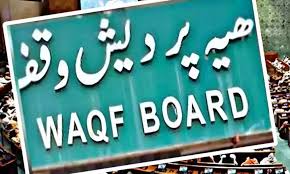
The Waqf Act, 1995 was enacted by the Indian Parliament to regulate and manage waqf properties across the country through State Waqf Boards. A waqf refers to a permanent dedication of movable or immovable property for religious, pious, or charitable purposes recognised in Islam.
The Act was based on earlier waqf laws dating back to the colonial era and replaced the Waqf Act of 1954. Over time, it has undergone multiple amendments, including the latest Waqf (Amendment) Act, 2025, which is presently under judicial scrutiny for its alleged impact on tribal lands and government properties.
The Waqf (Amendment) Act, 2025, passed by the Lok Sabha on April three and Rajya Sabha on April four and signed by the President on April five, removed the concept of “waqf by user”, which allowed properties long used for religious purposes to be treated as waqf without formal documentation.
UNI