



The Minister emphasized the rigorous safety protocols followed at every stage of nuclear plant development and operation, assuring the nation that India’s nuclear energy program is both secure and sustainable.
Dr. Jitendra Singh declared that safety is the cornerstone of India’s nuclear energy policy. “In the Department of Atomic Energy, we follow the rule of ‘safety first, production next.’ Every stage, from site selection to operational checks, is governed by stringent protocols,” he said. He outlined the extensive inspection regimen, which includes quarterly reviews during construction, semi-annual inspections after a plant becomes operational, and a mandatory five-year license renewal process.


India’s nuclear safety framework is further bolstered by international oversight. The World Association of Nuclear Operators (WANO) and other global bodies periodically review India’s facilities, reinforcing their safety standards.
Dr. Jitendra Singh highlighted evidence-based achievements in reducing radiation emissions, which he called a testament to the Department of Atomic Energy’s meticulous efforts. “Globally, the critical safety benchmark for radiation emissions from nuclear plants is 1,000 microsieverts. In India, our plants consistently operate well below this threshold,” he explained.
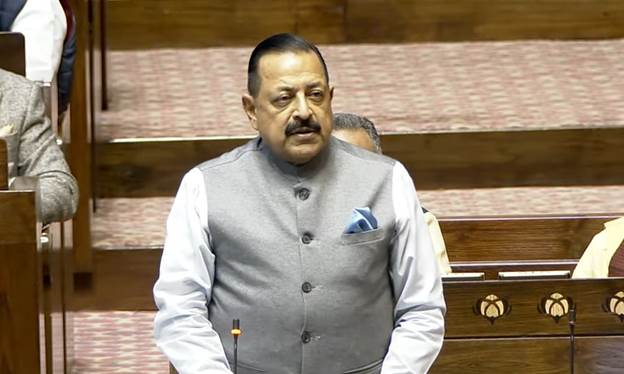
Dr. Jitendra Singh highlighted significant improvements in radiation levels, noting that, for example, at the Kudankulam plant, emissions have decreased from 0.081 microsieverts a decade ago to just 0.002 microsieverts today. Similarly, the Kalpakkam plant has experienced a substantial reduction, with levels dropping from 23.140 microsieverts in 2014 to 15.961 microsieverts in 2023.
India’s nuclear plants are strategically designed to withstand natural disasters such as tsunamis and floods. Dr. Jitendra Singh explained that facilities on the eastern coast are situated more than 1,300 kilometers from tsunami-prone zones in Indonesia, while those on the western coast, like the Tarapur plant, are positioned over 900 kilometers away from the nearest tsunami risk zone in Pakistan.In addition, plants are constructed above the highest recorded flood and sea levels to ensure safety even in extreme conditions.
Dr. Jitendra Singh also highlighted milestones that underscore India’s emergence as a leader in nuclear energy. The Kaiga Generating Station in Karnataka achieved an unprecedented 962 days of continuous operation, setting a global benchmark. Tarapur, India’s first nuclear power plant, has completed 50 years of successful operation, a remarkable feat in the global nuclear industry.
India’s first indigenous Pressurized Heavy Water Reactor (PHWR) is now operational at Kakrapar, Gujarat, showcasing the country’s growing self-reliance in nuclear technology. Additionally, the Kudankulam plant, which had remained stalled for decades, has been made fully functional under the current administration.
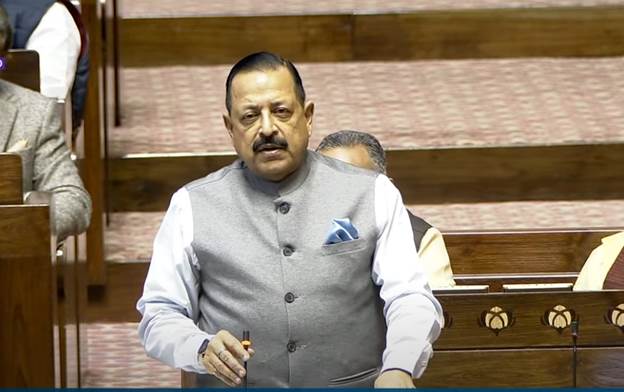
Dr. Jitendra Singh highlighted that India’s nuclear program extends well beyond power generation, staying true to Homi Bhabha’s vision of using atomic energy for peaceful purposes. He noted that nuclear technology is being effectively applied in diverse areas such as agriculture, where it aids in developing radiation-resistant crop varieties; food preservation, by extending the shelf life of perishable items; healthcare, through advanced cancer treatments and the production of medical isotopes; and security, by manufacturing protective gear for law enforcement personnel.
Addressing the debate on the Civil Liability for Nuclear Damage Act of 2010, Dr. Jitendra Singh explained that the current framework adequately safeguards public interests while ensuring a viable environment for foreign and domestic investments. The liability regime places the primary responsibility on operators, with provisions for supplier accountability under specific circumstances.
Dr. Jitendra Singh concluded by asserting that India, once perceived as a minor player in nuclear energy, has emerged as a global leader. “India is no longer just following global standards; we are now setting benchmarks that others aspire to achieve,” he said.
As the country pursues ambitious nuclear energy targets, including contributing to sustainable development and reducing carbon emissions, the government’s commitment to safety remains paramount. India’s progress in nuclear energy not only ensures domestic energy security but also positions the nation as a trusted partner in global energy and technology collaborations.
This statement from the Union Minister comes at a time when nuclear energy is increasingly seen as critical to achieving global climate goals, further cementing India’s leadership in the field.
PIB