

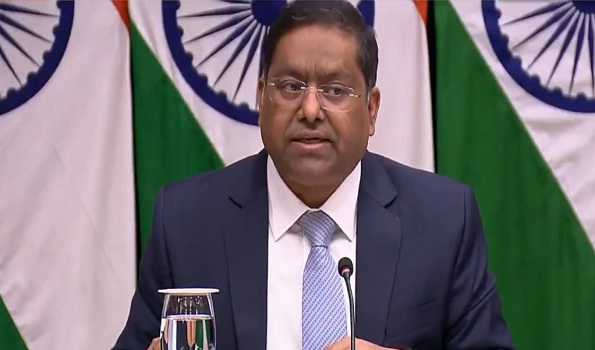


“We have seen the US press statement regarding the revocation of the sanctions waiver for Chabahar Port. We are presently examining its implications for India,” Ministry of External Affairs spokesperson Randhir Jaiswal said at a media briefing today.
The previous Donald Trump administration had granted the waiver in 2018 citing the port’s importance for Afghanistan’s reconstruction and humanitarian aid. The waiver protected India’s involvement in the port project.
While revoking the waiver yeserday, the US cited Iran’s “support to regional terrorist proxies and advance weapons systems that pose a direct threat to US forces and our allies”.
The US State Department noted that the revocation, which takes effect on September 29, is consistent with its broader “maximum pressure” campaign against Tehran and warned that once the revocation is effective “persons who operate the Chabahar Port or engage in other activities may expose themselves to sanctions”.
India has been actively involved in developing the Shahid Beheshti terminal at Chabahar Port. Since December 2018, India Ports Global Limited (IPGL), an Indian state-owned company, has been operating the terminal.
In May last year, India and Iran formalized their commitment by signing a 10-year contract for India to continue operating the terminal. Under this agreement, IPGL committed to investing about $120 million for equipment and infrastructure. Use of the Chabahar port allows India to bypass Pakistan to create a direct trade route to Afghanistan and the Central Asian countries.
The port is also a key point in the International North-South Transport Corridor (INSTC), a multi-modal route connecting India, Iran, Russia, and Europe.
UNI