


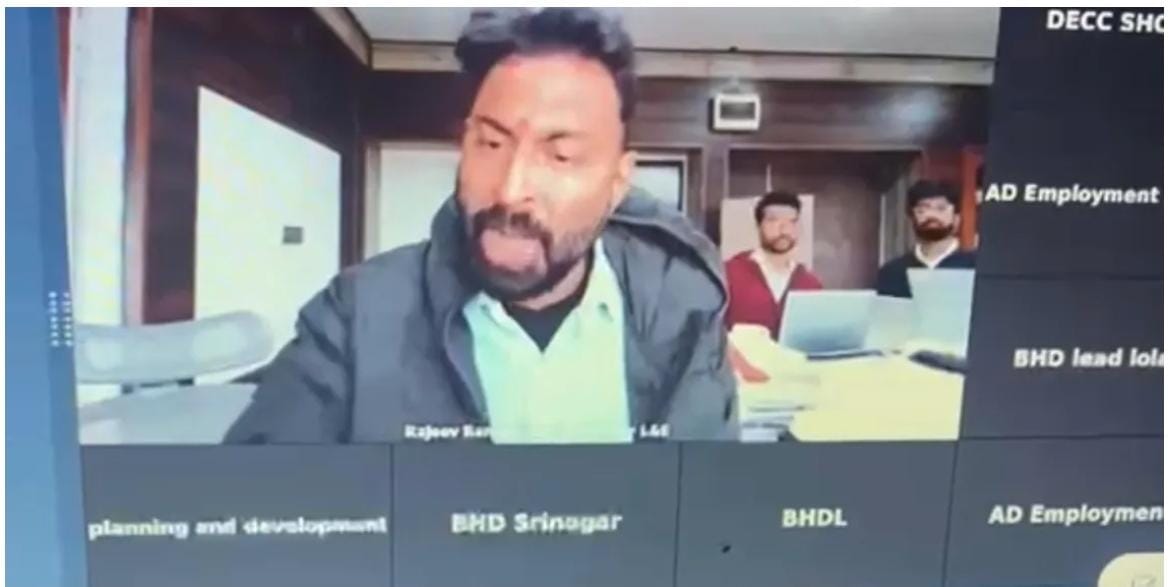
Srinagar, Oct 15 (JKNS): Reports of an alleged verbal outburst by a senior IAS officer against a woman Jammu and Kashmir Administrative Service (JKAS) officer during an official review meeting have triggered concerns over professional conduct, workplace dignity and accountability within the administration.


A video which went viral on social media as per news agency JKNS stated that, the senior officer allegedly used objectionable and humiliating language against the woman officer and threatened her with suspension and dismissal during the meeting. If established, such conduct would raise serious questions about the standards of decorum expected from senior public servants.
Administrative hierarchy is intended to ensure discipline, coordination and effective governance not to provide a licence for personal insults, intimidation or the humiliation of subordinate officers. Differences over official work must be addressed through reasoned discussion, established procedures and the applicable service rules.
The incident has also drawn attention to the position of JKAS officers, who shoulder substantial responsibilities in field administration, revenue management and public service delivery, often under demanding circumstances. They are entitled to the same professional dignity, procedural fairness and protection against workplace harassment as any other public servant.
The matter assumes particular significance because the alleged exchange reportedly involved a woman officer in a formal government meeting. Accountability and professional restraint are indispensable in such settings, irrespective of an officer’s rank or cadre.
Observers have stressed that any complaint should be examined impartially, with the complete recording and other relevant evidence authenticated before conclusions are drawn. If the allegations are substantiated, appropriate action should follow strictly in accordance with the applicable rules. Equally, the rights of all concerned must be protected during the inquiry.
The episode has renewed calls for a workplace culture in which authority is exercised with responsibility, disagreements remain professional, and no officer is made to feel that raising a concern or performing an official duty could invite personal humiliation or intimidation.
The principle is simple: administrative authority commands respect through fairness and integrity, not fear. (JKNS)