

In a major humanitarian healthcare initiative, the Indian Army under the aegis of Chinar Corps, in close coordination with the Directorate General of Armed Forces Medical Services (DGAFMS), is set to launch “Operation Drishti” — a specialised seven-day medical outreach programme focused on advanced cataract care. The Mega Cataract Surgery Camp will run from 23 to 30 September 2026, bringing high-quality ophthalmic treatment free of cost to underprivileged civilians and veterans living in the remote and challenging terrain of Tanghdhar and surrounding areas of the Kashmir Valley.
The operation addresses a long-standing gap in specialised eye care in far-flung and dispersed habitations, where access to advanced ophthalmic facilities is severely limited. By combining extensive pre-camp screening with state-of-the-art surgical capability, Operation Drishti aims to restore sight and improve the quality of life for hundreds of patients who would otherwise face prolonged hardship.
### Extensive Screening Across Multiple Locations
The foundation of the camp was laid through a series of intensive screening camps conducted by 92 Base Hospital. Medical teams travelled to multiple remote and border locations, including Tangdhar, Uri, Bandipora, Khanabal, Kangan, Dawar and Baramulla. Through these efforts, 400 patients were carefully identified and shortlisted for cataract surgery. The screening process ensured that only those most in need of surgical intervention were selected, prioritising individuals from underprivileged backgrounds and veterans residing in difficult terrain.
This preparatory phase demonstrated the Army’s systematic approach to healthcare outreach. Rather than organising an isolated surgical event, the initiative began with thorough identification of patients across a wide geographic spread, ensuring the camp would deliver maximum impact where it is needed most.
### Expert Surgical Team and Advanced Infrastructure
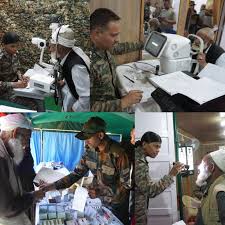
A highly specialised surgical team has been mobilised from the prestigious Army Hospital (Research & Referral) in New Delhi. The team is led by Brigadier (Dr.) Sanjay Kumar Mishra, Head of Ophthalmology, bringing deep expertise and experience in complex eye surgeries. Advanced diagnostic equipment and sophisticated micro-surgical setups have already been deployed at the designated locations to guarantee zero-cost, high-tier care matching the standards of leading military medical institutions.
The surgical effort will be executed in close coordination with 92 Base Hospital and various medical and non-medical units of the Army. This integrated approach ensures seamless logistics, patient management, and post-operative support, reflecting the Armed Forces’ ability to deliver specialised medical services even in challenging operational environments.
### Two-Phase Surgical Programme
Operation Drishti has been carefully structured in two distinct phases to optimise resources and patient safety:
– **Phase I (24–25 September 2026):**
200 patients will undergo cataract surgery at the underground Forward Surgical Centre (UG FSC) of Ex 328 Field Hospital in Tangdhar. Conducting surgeries in this forward location brings advanced care directly into a remote border area, significantly reducing the need for patients to travel long distances.
– **Phase II (28–29 September 2026):**
Another 200 patients will receive surgery at 92 Base Hospital in BB Cantonment, Srinagar. This phase allows the specialist team to operate in a fully equipped hospital environment while continuing to serve patients from the wider region.
Together, the two phases will provide free cataract surgery to 400 carefully selected individuals, restoring vision and enabling many to resume normal daily activities with greater independence and dignity.
### Significance for Remote Communities and Op Sadbhavana
By bringing advanced ophthalmic care to the doorstep of the local population, Operation Drishti directly tackles the acute shortage of specialised eye-care facilities in remote and difficult-to-access areas of the Kashmir Valley. Cataract remains one of the leading causes of preventable blindness, particularly among the elderly and those living in regions with limited medical infrastructure. For many of the shortlisted patients, this camp represents a rare opportunity to receive life-changing treatment without financial burden.
The initiative forms part of the Indian Army’s sustained commitment to healthcare outreach under Operation Sadbhavana. Beyond the immediate medical benefit, such programmes strengthen the enduring bond of goodwill and trust between the Defence Forces and the people of the Kashmir Valley. They demonstrate that the Army’s role extends beyond security to active participation in the well-being and development of local communities.
Lt Col Suneel Bartwal, PRO & Spokesperson, Ministry of Defence, Jammu, has highlighted the comprehensive planning and inter-agency coordination behind the camp. The deployment of a specialist team from New Delhi, the use of advanced equipment, and the dual-location surgical model underscore the seriousness of the Army’s intent to deliver meaningful, high-quality care.
### A Step Towards Clearer Futures
As Operation Drishti begins, it stands as a powerful example of how the Indian Army continues to combine professional medical excellence with genuine community service. For the 400 patients who will regain their sight, and for the families and communities that support them, the camp offers more than surgical intervention — it offers renewed hope, independence, and a brighter outlook on daily life.
In the rugged landscape of Tanghdhar and across the wider Kashmir Valley, Operation Drishti reaffirms a simple yet profound message: quality healthcare can and will reach even the most remote corners when commitment, expertise and compassion come together.