

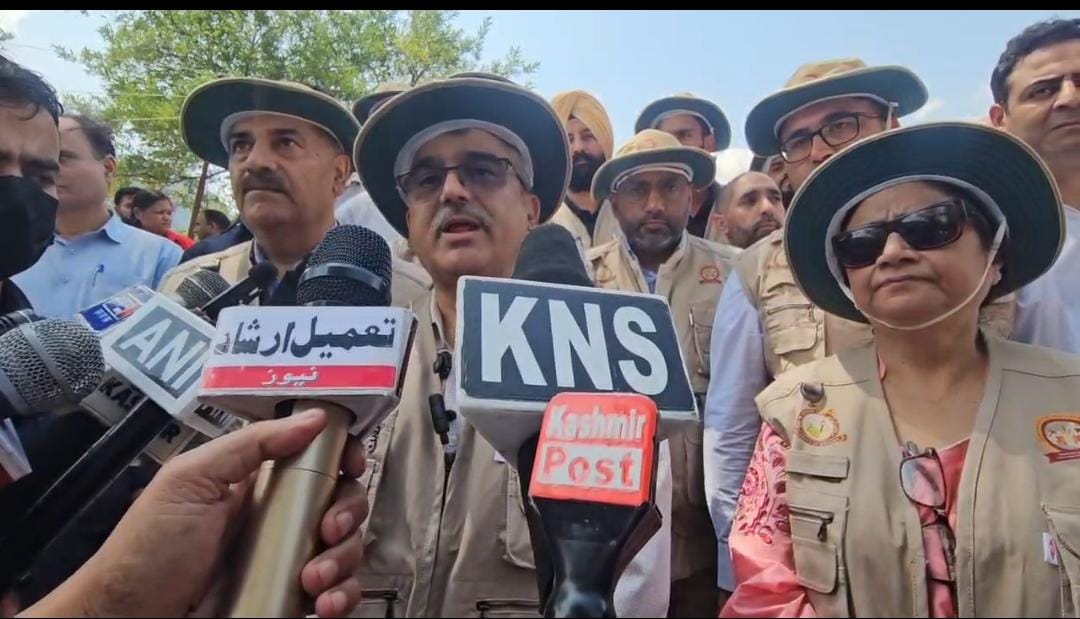
Uri, Aug 29 (JKNS): Chief Secretary of Jammu and Kashmir Atal Dulloo on Saturday visited the historic 2,000-year-old Buddhist archaeological site at Zehanpora in Uri, where ongoing excavations are bringing to light significant evidence of the region’s ancient Buddhist and cultural heritage.
Chief Secretary was accompanied by Vice-Chancellor of the University of Kashmir, Prof. Neelofar Khan; Deputy Commissioner Baramulla, Syed Fakhruddin Hamid; SSP Baramulla, Gurinderpal Singh; and other senior officials.


During the visit, as per news agency JKNS, Dulloo inspected the excavation site and took stock of the ongoing archaeological work. He appreciated the efforts being made to explore, document and preserve the region’s rich archaeological heritage.
Dulloo congratulated the University of Kashmir, its Department of Archaeology and the students involved in the excavation project, observing that the exercise would provide students with valuable practical exposure to archaeological research and excavation techniques.
The second phase of the excavation is expected to yield further significant findings, as researchers will have around three months to undertake work at the site, compared with approximately one month during the previous excavation season.
The Chief Secretary said the complete excavation and documentation of the site could take up to five years, reflecting the scale of the archaeological remains and the historical significance of the discoveries that researchers are seeking to uncover and document.
Highlighting the importance of the site, Dulloo said the findings could eventually emerge as an important cultural asset for Jammu and Kashmir and potentially become a major attraction for tourists interested in the region’s Buddhist and archaeological heritage.
He emphasised the need for sustained research, scientific excavation, preservation and proper documentation to ensure that the historical legacy of Zehanpora is adequately studied and brought to wider public attention.
The visit underscored the growing significance of the Zehanpora archaeological site and the importance of continued institutional efforts to explore and preserve its ancient heritage for future generations. (JKNS)