


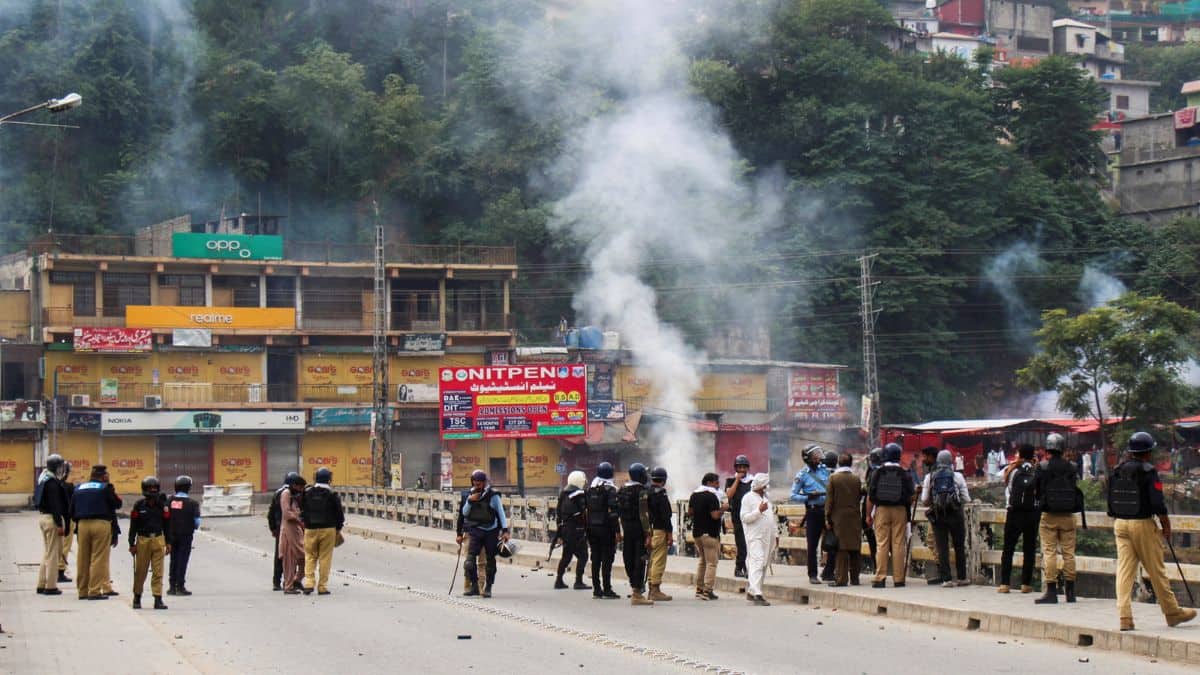
The streets of Muzaffarabad, Rawalakot, and Mirpur are no longer reverberating with the chanted slogans of loyalty to Islamabad. Rather, they are resounding with a fresh and bold message: the rejection of Pakistan’s “failed occupation.” For several decades, the story that has been portrayed in Pakistan has been one of “brotherhood” and “unity.” But the recent spates of unrest that have been sweeping across the Pakistan-occupied Jammu and Kashmir (PoJ&K) have laid bare this charade and revealed a very ugly truth.
The Facade Crumbles: A History of Unrest
The Jammu Kashmir Joint Awami Action Committee (JKJAAC) led uprising is not an isolated incident but the culmination of decades of pent-up anger. The massive “shutter-down” strikes and marches that brought the region to a standstill in late 2025 were a clear referendum on the administrative acumen of the Pakistani government. When thousands of people marched past curfews, tear gas and internet blockages towards the capital, they were not merely demanding a reduction in their electricity bills, they were also questioning the very validity of the existing structure of governance.
The pictures of Rangers and police opening fire on unarmed protesters in Muzaffarabad, people they claim to “protect,” are a damning testimony to the relationship between the state and the region. As Shaukat Nawaz Mir, a leading figure in the uprising, aptly said during the crackdown, “The state, which should be a mother to us, has become a witch killing its own children.” This encapsulates the psychological disconnection that has taken place; the people of PoJ&K no longer feel that Islamabad is a well-wisher but an extractor.
Resource Plundering: Light for Pakistan, Darkness for Kashmir
However, at the root of this discontent is a colonial economic model. The region has abundant hydropower resources, churning out thousands of megawatts of electricity that are fed into the national grid of Pakistan. However, the people in the region are subjected to constant load shedding and are made to pay outrageous prices for the very same electricity that their rivers churn out. The demand for electricity to be provided at the cost of hydel power is not a demand for alms; it is a demand for the return of stolen rights.
The complaint is not, however, limited to electricity. In Gilgit-Baltistan, the “Khalisa Sarkar” land laws are seen as a means to dispossess the indigenous population of their ancestral lands, paving the way for state acquisition and foreign investment schemes that promise little to the local population. The reduction in subsidies on wheat, a basic survival commodity, was only the spark that set off a fire that had been simmering for years over the plundering of resources. The message from the streets is clear: our resources are lighting up Pakistan’s cities while our homes are in the dark and our plates are empty.
Puppet Structures and the “Solidarity” Charade
The governance crisis in PoJ&K is further compounded by a political structure that is intended to ensure compliance. The administration in Muzaffarabad is little more than a post office for the decrees issued from Islamabad. The very presence of the “refugee seats” in the legislative assembly has been widely condemned by local activists as a means of ensuring that the elections are rigged in order to maintain a stranglehold on power, and that no independent voice is ever able to emerge to challenge the status quo.
This systemic disenfranchisement renders the annual
“Kashmir Solidarity Day” celebrated by Pakistan on February 5th ever more hypocritical. For the people of PoJ&K, it is a day of bitter irony. How can a state purport to be the defender of the rights of Kashmiris across the Line of Control when it is itself repressing those rights with military force?
The continued calls for the stripping of elite entitlements, free fuel, fancy cars, and lavish protocols for a bloated bureaucracy underscore the chasm between the rulers and the ruled. The people are no longer prepared to underwrite the lifestyles of a “puppet” elite while they struggle to buy flour.
The protests in PoJ&K and Gilgit-Baltistan represent a turning point. They represent a moment when the old tropes of religious kinship and “protection” can no longer obscure the truth of administrative incompetence and economic exploitation. The people have surveyed the governance model imposed upon them and rejected it. The “failed occupation” is no longer simply a partisan complaint against political opponents; it is the reality experienced by millions of people who are finally rising to assert: “No more.”