

By Mehak Farooq
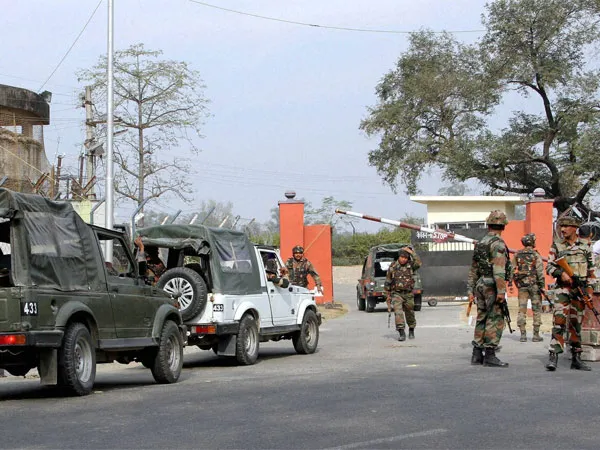
The morning of 29 November 2016 still lingers in the memory of Nagrota. Just after dawn, gunfire tore through the stillness as three Jaish-e-Mohammed terrorists breached the Indian Army’s 166 Field Regiment camp. Their sudden entry, aided by police uniforms used as disguises, brought terror to a place that housed not only soldiers but also their families — women, children and infants who lived inside the residential blocks.


Seven Indian soldiers were killed that day, including two officers who acted with remarkable resolve during the chaotic first moments of the assault. Families were pushed into danger as terrorists attempted to create a hostage situation deep within the camp. Yet even as the situation escalated, it was the courage and discipline of the Indian Army that shaped the outcome. Soldiers ran towards the sound of gunfire, not away from it, knowing that family quarters — the most vulnerable part of any camp — were under attack. They fought room to room, pushing the terrorists back despite the immense difficulty of operating in a live environment filled with civilians.
For residents of Jammu, Nagrota was a grim reminder of the threat Pakistan continues to pose. But it also revealed something deeper: the bond between the people of this region and the forces that protect them. The attack was meant to generate fear, to disturb the sense of security in a peaceful military town. Instead, it created a wave of unity. Locals stepped in immediately, offering help as soldiers evacuated families, and the area came together in grief and solidarity. For days afterwards, civilians placed flowers at the camp gates, a quiet tribute to the soldiers who fought back under impossible circumstances.
Pakistan’s intention was clear. After India’s surgical strikes earlier that year, Islamabad needed a counter-narrative — a way to prove its proxy machinery remained alive and capable. JeM’s “Afzal Guru Squad,” which carried out the Nagrota attack, was designed for precisely such symbolic missions. The assault did not achieve what it set out to do. Instead of shaking India’s confidence, it strengthened the resolve of both the Army and the people of Jammu.
Today, J&K is far more stable than it was in 2016. The security grid has transformed, local support networks that once assisted infiltrators have been dismantled and India’s counter-infiltration structures have become significantly more effective. Yet Nagrota continues to hold meaning. It reminds the region that Pakistan’s proxies may attempt to strike, but they cannot break the will of its people.
The soldiers who fell that day did more than defend a camp; they defended an idea — that Jammu & Kashmir will not be pushed back into fear. Nagrota stands today not as a symbol of vulnerability but of resilience, proof that the region and its guardians are stronger than those who try to destabilise it.
(Hailing from Kashmir and based in New Delhi, Mehak Farooq is a journalist specialising in defence and strategic affairs. Her work spans security, geopolitics, veterans’ welfare, foreign policy, and the evolving challenges of national and regional stability.)