


The Kashmir Valley, celebrated for its breathtaking beauty and deep cultural traditions, has also been shaped by the role of infrastructure in influencing its social and economic direction.
Situated in the Himalayas with enormous possibilities for growth, the Kashmir valley has long dealt with the challenges of distance, weather and circumstances that slowed progress.
Yet, despite these hurdles, the journey of development in this region reflects both resilience and determination. The valley, once dependent on traditional routes such as the Jhelum River and mountain passes for trade and communication, saw only limited modern infrastructure pre-independence era.
Their focus on gardens, caravan paths and administrative structures provided cultural and civic foundations but did not bring large scale transformation. After independence, governments at both central and state levels realized the importance of linking the valley with the rest of the country.
Initiatives such as the Banihal tunnel, the Jammu Srinagar highway and irrigation canals laid the early foundation of connectivity, though progress remained slow due to the harsh terrain, long winters and occasional natural disturbances due to weather.
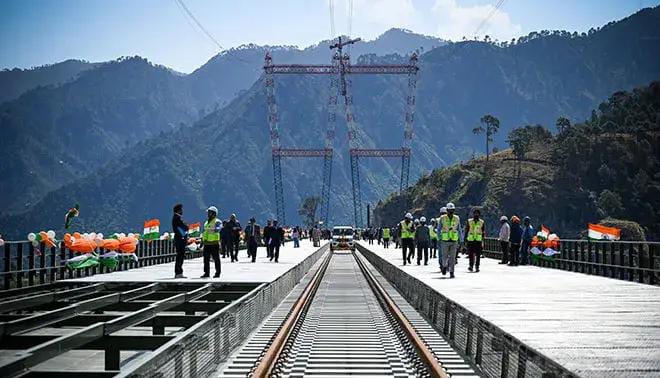
In the recent decades, however, infrastructure development has taken on a more dynamic role in shaping modernization and opportunity. Roads, railways, air services, power generation projects, schools, colleges and digital connectivity are gradually transforming the region. The Jammu Srinagar National Highway, called the lifeline of Kashmir, has been modernized through major projects like the Chenani Nashri and Zojila tunnels, which have shortened travel time and increased safety. The railway network, once considered impossible in the mountainous landscape, now runs from Banihal to Baramulla and expanded further toward Katra and beyond, providing an economic lifeline. Air travel through Srinagar International Airport has also expanded, boosting both trade and tourism. These steps further improve physical access and create opportunities for economic activity, cultural exchange and integration with the rest of the country and world.
The valley’s progress in energy and power infrastructure has been equally significant. Hydropower plants such as Uri and Kishanganga harness the rivers of Jhelum and Chenab to produce electricity for both local use and wider grids. Electrification of rural areas has provided light and energy to villages that once depended solely on traditional means, although challenges of supply shortage and winter disruptions continue. New efforts to expand renewable resources such as solar projects and micro hydel plants show that development can move in harmony with environmental sustainability. Reliable power has become essential for households and driving local industries like handicrafts, horticulture and emerging IT services, along with tourism, which remains a key strength of the valley’s economics activities. Meanwhile, urbanization has expanded in places like Srinagar, where housing, sanitation, drainage and waste management are gradually being upgraded. Smart city initiatives are focusing on improving roads, lighting, public spaces and civic amenities while also trying to protect the valley’s cultural identity.
Despite visible progress, certain hurdles continue to slow down infrastructure development. The valley’s rugged mountains and heavy snowfall make construction and maintenance difficult. The delicate balance between modernization and the preservation of the valley’s fragile ecosystem, culture and traditions requires thoughtful policies and responsible action. For infrastructure to truly serve the people, it must be inclusive, resilient and environmentally conscious. Public and private partnerships, greater community participation and modern technology will all be crucial in ensuring that development moves ahead in a way that benefits everyone. Green energy, eco-friendly housing and responsible tourism offer promising directions that can reduce pressure on resources while supporting livelihoods.
Ultimately, the story of infrastructure in the Kashmir Valley about physical projects like tunnels, highways, or power plants and about empowering communities and building a foundation for peace and prosperity. Each new step in connectivity, energy, education, healthcare or digital access adds strength to the valley’s social fabric and economic potential. While obstacles remain, consistent investment, careful planning, and cooperation between people and institutions can transform these challenges into opportunities. By blending aspirations of local communities with broader development goals, the valley has the potential to stand as a model of how natural beauty and cultural heritage can exist alongside modern progress. The journey of growth is still unfolding, reflects the promise of stability and integration that benefits the people of Kashmir the larger vision of national advancement and regional peach and harmony.