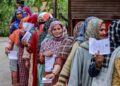



Srinagar: Dozens of refugees who migrated from Jammu and Kashmir to Pakistan-occupied Kashmir (PoK) after the 1989 insurgency staged demonstrations in Muzaffarabad on Tuesday, demanding the restoration of their 6% quota in government jobs. The protests erupted days after the PoK’s High Court struck down the decades-old quota system, declaring it unconstitutional.
Gathered outside the Central Press Club in Muzaffarabad, the protesters carried placards, shouted slogans, and accused authorities of ignoring their plight. Many of them said the court’s ruling has deprived thousands of displaced youth of crucial opportunities in government service and education, pushing their already vulnerable community into deeper economic hardship.
Background of the Quota System
For decades, refugees from Jammu and Kashmir both those who migrated in 1947 and those displaced in the aftermath of the 1989 armed conflict had access to a share of reserved seats in government jobs and educational institutions under PoK’s quota system. Out of the 25% quota historically set aside for refugees, 6% was specifically earmarked for the post-1989 migrants.
According to official estimates, nearly 45,000 to 46,000 people fall into this category. Most of them continue to live in refugee camps and makeshift settlements across different districts of PoK, with limited access to resources and livelihood opportunities. For these families, the quota had been seen as a lifeline a mechanism that gave their youth at least a fighting chance to secure government jobs and break the cycle of poverty.
Court Ruling Sparks Anxiety
In its recent judgment, the High Court declared that quota-based appointments and admissions violated constitutional principles of equality, ordering that all future recruitment and selections must be made purely on merit. While the verdict was hailed in some quarters as a step towards transparency and fairness, it has provoked widespread concern among refugees who argue that the playing field has never been level for them.
“The court may call it discriminatory, but for us it was survival,” said one protester. “We left our homes, our land, and everything we owned in 1989. We have lived like outsiders for decades. If you take away this quota, you are shutting the last door of opportunity for our children.”
Protesters’ Demands and Next Steps
Community leaders speaking at the demonstration vowed to challenge the High Court’s verdict in the PoK Supreme Court. They appealed to the government to intervene and safeguard their rights until a final judgment is delivered.
“The quota system was not charity, it was recognition of our suffering and displacement,” one leader told reporters. “If this decision is not overturned, we will have no option but to intensify our agitation.”
The protesters announced that their movement would expand beyond Muzaffarabad if their demands remain unmet. Plans are already in place for sit-ins and demonstrations in other districts of PoK in the coming weeks.
Broader Implications
The dispute over refugee quotas has reignited debate within PoK on how to balance principles of meritocracy with the need for affirmative action. While many residents support the idea of merit-based appointments to curb corruption and favouritism, refugee communities argue that equality in law does not translate into equality in real life, especially for those who have lived for decades in displacement.
Political analysts say the government now faces a sensitive dilemma, whether to uphold the court’s ruling in the name of fairness or to amend the law to protect the rights of refugees who see quotas as their only safeguard against marginalisation.
As the protesters dispersed from Muzaffarabad’s Press Club, their message was clear: unless the 6% quota for post-1989 refugees is restored, their agitation will grow louder and spread wider.