


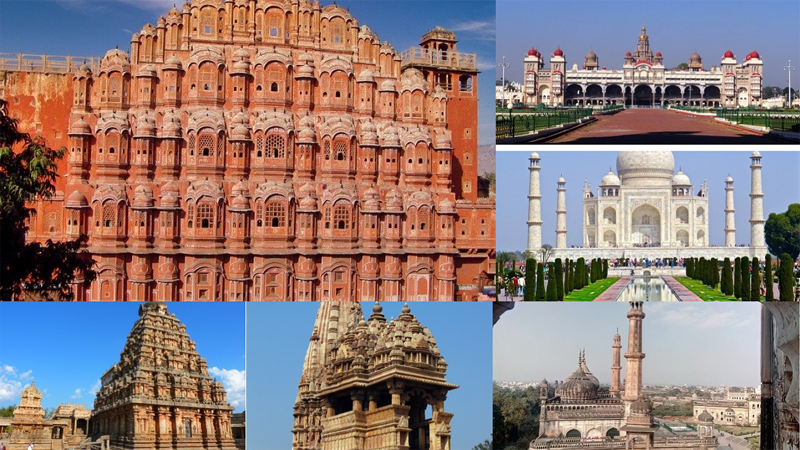
India’s heritage is something that can be felt not just through its stories or traditions but through the silent presence of its historical monuments, standing tall for centuries. From the intricate temples in the South, the ancient Buddhist stupas of Sanchi, to the world-renowned Taj Mahal and majestic forts of Rajasthan, these structures silently narrate the tales of kings, battles, devotion, and artistry. Each monument has a story, whether of love, like the Taj Mahal, or spiritual devotion, like the temples of Tamil Nadu. They are more than just stone and marble; they are living reminders of India’s past and form a bridge connecting modern India to its ancient roots. Walking through their arches and corridors, one can almost feel history coming alive.
These monuments are valuable not just because of how beautiful they look, but for the history they carry. They show us how people lived, built, worshipped, and celebrated life centuries ago. For students, tourists, and locals alike, these structures serve as open history books, teaching lessons no classroom can fully convey. People from around the world travel to India just to witness this heritage, contributing not only to cultural exchange but also to the economy through tourism. They give people pride and a sense of belonging, reminding every Indian that they are part of a civilization that has thrived and evolved over thousands of years. In an age where change is constant, these timeless structures offer a sense of continuity and identity that anchors the nation.
But behind their beauty, many of these monuments face silent struggles. Pollution, especially in cities, is one of the biggest threats. Industrial smoke, vehicle fumes, and acid rain gradually corrode these priceless structures. The Taj Mahal, once pure white, now shows signs of fading due to pollution. Another problem is urbanization. With cities expanding rapidly, buildings often creep too close to heritage sites, disturbing their surroundings and spoiling their visual charm. Many lesser-known monuments are left neglected, simply because they are not famous. Without care and maintenance, time takes its toll on them, leading to cracks, fading, and sometimes total collapse. Tourism, too, though beneficial, can have its drawbacks. People carving names on walls, littering, or touching fragile artwork unknowingly damage these sites. And now, with climate change bringing unpredictable weather, heavy rains, and rising temperatures, many ancient structures find themselves vulnerable to damage they were never built to withstand.
Thankfully, the fight to protect India’s heritage is ongoing. The Archaeological Survey of India, an organization working since 1861, takes care of many important monuments, carrying out repairs and conservation work. But with thousands of sites spread across the country, the task is massive. Other organizations, like INTACH, also step in, working not just on repairs but involving communities to create awareness about the importance of preserving these monuments. The government has even introduced creative initiatives like “Adopt a Heritage,” inviting companies to participate in maintaining and managing these sites as part of their social responsibility. This way, private businesses lend their resources and skills to protect India’s shared history.
However, it’s not just the government’s job to care for these historical places. Ordinary people play a big role too. Schools and colleges can help by teaching students the importance of heritage from an early age. Simple acts like not littering at a site, not scratching walls, or respecting barriers can go a long way in preserving these structures. Locals living near heritage sites can be involved as caretakers, guides, or promoters of their own history. After all, when people feel a sense of ownership and pride in their heritage, they are more likely to protect it. Responsible tourism is key – visitors must learn to admire without harming.
The monuments that dot the Indian landscape are not just remains of a glorious past; they are part of who we are today. Every broken wall or faded carving carries a piece of India’s story. Conserving them is not about holding onto the past but about preserving the identity and soul of a nation. Whether it’s through government efforts, private partnerships, or individual actions, everyone has a role to play. These structures stood through wars, weather, and time itself – it would be a tragedy if they fell now due to neglect. By working together, we can ensure that these symbols of India’s heritage continue to inspire and educate future generations, standing tall and proud, just as they have for centuries.