


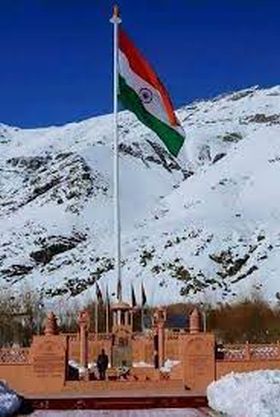

Located high in the cold, rugged mountains of Ladakh, Drass stands as a strong symbol of courage and pride. During the Kargil War in 1999, Drass and its people became part of an important story, showing a spirit that helped India and its brave army through one of its toughest battles.
In 1999, Drass and its surrounding peaks became the battleground for some of the fiercest confrontations of the Kargil War. The area’s strategic value was immense: Drass controlled the Srinagar-Leh highway (NH1), a vital route linking the Kashmir valley to Ladakh and the base for Indian Army operations.
Pakistani forces, using the cover of winter, had surreptitiously occupied the high ridges and peaks—such as Tololing and Tiger Hill—overlooking Drass and the highway, threatening both military logistics and civilian lifelines.
The Indian Army’s mission to reclaim these heights—carried out in punishing weather, at altitudes above 10,000 feet, and under constant enemy fire—demanded unparalleled courage. The recapture of Tololing and Tiger Hill was not only militarily important but also became legendary for the sheer tenacity displayed by the soldiers, many of whom fought alongside or with the support of local Ladakhi and Drass communities.
For the people of Drass, the war was not an abstract event playing out on distant peaks. Daily life was upended by shelling, evacuations, and shortages, even as normal routines were suspended for survival. Yet, the town’s residents bore these hardships with remarkable fortitude.
Some families—despite being forced from their homes—contributed to the war effort by providing critical information about enemy positions, helping guide supply columns through treacherous mountain tracks, and assisting with the evacuation or sheltering of the wounded. Porters and volunteers from Drass and nearby villages played crucial roles in ferrying supplies—often under enemy observation and threat.
The conflict also revealed the deep-seated sense of belonging and patriotism among the locals. Even at great personal risk, community leaders and ordinary villagers stood as early sentinels, alerting India’s military to unusual activity and helping bridge the gap between civilian endurance and military operations.
The spirit of Drass is now enshrined at the iconic Kargil War Memorial, built at the base of Tololing. Rows of pink sandstone bear the names of the fallen, while the Indian national flag flies high against the dramatic backdrop of the very peaks that once witnessed relentless fighting. Each year on Kargil Vijay Diwas, soldiers, veterans, and citizens converge here to pay homage. The memorial stands not just as a monument to victory but as a living testament to the sacrifices shared by soldiers and locals alike.
For the younger generation growing up in Drass, the legacy of the war is woven into daily life and collective identity. Local stories, annual ceremonies, and the presence of the memorial all serve to remind residents and visitors of the exceptional resilience and unity their town demonstrated in the face of overwhelming odds. Tourism, too, has found new meaning, as travellers from across India and the world come not just for the rugged beauty and freezing temperatures, but to connect with the town’s extraordinary history.
(A renowned Defence Analyst, commentator & author, he hosts Defence Dynamics on DD India, contributes to top publications, and has covered European defence industries. A Sena Medal gallantry awardee, he led operations in Kashmir, commanded 9 Sikh Light Infantry, and studied at Army Public School Dhaula Kuan, Raja Ram Mohan Roy Academy Dehradun & Punjab University.)