

Aazan Manzoor


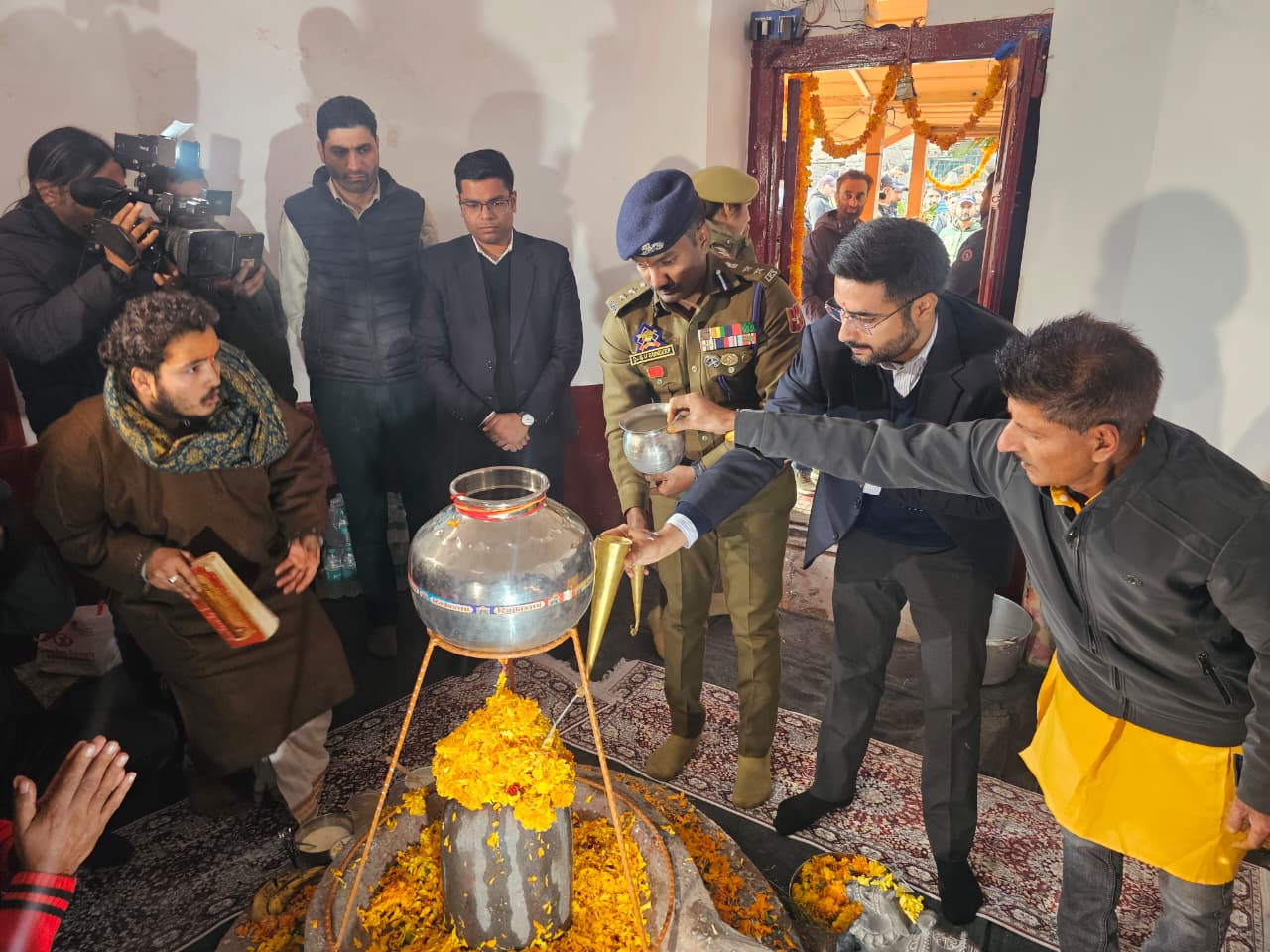
Srinagar, Nov 24 (JKNS): In a significant moment for Kashmir’s shared cultural and religious heritage, the nearly 700-year-old Shri Durgeshwari Mata Temple in Fateh Kadal area of Srinagar reopened to devotees on Tuesday after remaining closed for nearly 37 years, with religious prayers and conch shells marking its reopening on the auspicious occasion of Kartik Purnima.
Details available with news agency JKNS stated that, the temple, which had fallen into disrepair following the turmoil of the 1990s and the displacement of Kashmiri Pandit families, has been restored through collective efforts involving local residents, members of the Kashmiri Pandit community and Muslim neighbours.
The reopening ceremony was attended by the Deputy Commissioner Srinagar, along with devotees and local residents, as worship resumed at the historic shrine after decades.
The restoration initiative was reportedly started in September 2026 by Shashi Tikoo, who initially took up the cleaning and repair work on his own before more residents and well-wishers joined the effort.
A coordinated campaign was subsequently launched, involving cleaning, renovation, painting, installation of lighting, restoration of electricity and water connections, besides the installation of CCTV cameras for the temple’s security.
The participation of local Muslim residents and artisans remained a significant part of the restoration effort, reflecting the area’s traditional bonds of brotherhood and coexistence.
Located in the Bana Mohalla of Fateh Kadal, the temple stands adjacent to a mosque. According to local residents, the area once echoed with the morning Azaan from the mosque and prayers, bells and conch shells from the temple, while Hindu and Muslim families shared close social and neighbourhood ties.
The shrine is believed to be around seven centuries old and is associated with the reign of Sultan Zain-ul-Abidin, popularly known as Budshah. Known for its distinctive octagonal architecture, the temple houses an ancient Shivling and has traditionally been a place of worship dedicated to Lord Shiva, Goddess Durga and Lord Ganesha.
The temple complex also housed the Durga Pathshala, which served as a shared educational centre for Hindu and Muslim children for decades. The institution reportedly remained functional until the 1990s, when the prevailing turmoil and migration of Kashmiri Pandit families disrupted its activities.
During the restoration, local Muslim residents also appealed to Kashmiri Pandit families who had left the neighbourhood to return to their ancestral homes, assuring them of a warm welcome.
Residents recalled their childhood associations with Kashmiri Pandit families, saying the migration had left a deep void in the neighbourhood and expressing hope that the revival of the temple would help reconnect old bonds.
The reopening of the historic shrine has once again brought attention to Fateh Kadal’s shared cultural legacy, with the restoration effort highlighting the role of collective community participation in preserving Kashmir’s historical and religious heritage. (JKNS)