

JKNS DESK


New Delhi, Oct 16 (JKNS): The Supreme Court of India has examined the scope of legal safeguards available to journalists covering protests in the digital age, raising questions over the distinction between professional journalists, independent freelancers and social media content creators.
A Bench comprising Chief Justice of India Surya Kant and Justice Joymalya Bagchi as per news agency JKNS, directed law enforcement authorities to refrain from taking coercive action against a woman journalist who alleged that a counter-FIR against her was retaliatory in nature following her sexual harassment complaint against a police officer.
The proceedings come amid allegations of manhandling, harassment and obstruction faced by media personnel while covering demonstrations in the national capital. The Court’s observations highlighted the need to examine the specific circumstances of such incidents while determining the scope of protections that can be extended to journalists and other individuals documenting public events.
The Bench indicated that a blanket order extending special protection to every person recording events at a protest site would not be appropriate, while acknowledging the serious concerns raised regarding the safety of media professionals.
**Digital journalism and the question of protection**
During the hearing, Solicitor General Tushar Mehta, appearing for the Centre, highlighted the challenges arising from the expansion of digital media and the increasing number of people recording and publishing content online.
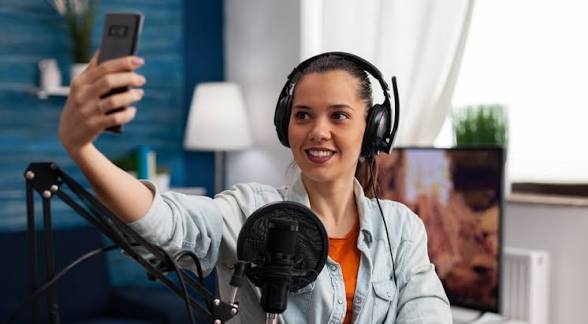
“The difficulty we are facing is that in the present era of digital technology, any person having a mobile is a journalist in his own right. It is our experience that there are several people who say we are freelance journalists. They have a mic and they record things and they upload these are all, what is going on is reel-making,” the Solicitor General submitted, according to the account of the proceedings.
The submissions brought into focus the question of whether the same level of special safeguards should apply uniformly to accredited journalists, employees of recognised media organisations, independent reporters and social media influencers.
The Court’s deliberations, as described in the account, centred on the need for a more nuanced framework that recognises different categories of media practitioners without undermining the fundamental right to report and document public events.
**Court discusses different layers of safeguards**
Justice Joymalya Bagchi reportedly emphasised the need to consider different layers of protection, taking into account the varied professional backgrounds and working arrangements of those engaged in journalism.
These could include accredited journalists, reporters working with recognised media houses, independent freelance journalists and digital content creators.
The issue has wider implications as smartphones and online platforms have made it easier for individuals to record protests, police action and other public events and disseminate footage in real time.
At the same time, the absence of clearly defined categories for special safeguards can create practical challenges for law enforcement agencies and courts when determining the nature and extent of protection applicable in a particular case.
The proceedings, however, did not establish a blanket legal status for all digital content creators as journalists. The question of the appropriate scope of protection remains subject to the Court’s consideration and the applicable legal framework.
**CCTV footage and digital evidence to be preserved**
The Bench also addressed allegations of sexual harassment and violence involving media personnel, observing that the complaints were serious and required consideration under the law.
The Court directed the Delhi Police to preserve CCTV footage and digital evidence relating to the protests held on October 10 and 11, so that material relevant to the allegations of police misconduct would remain available for examination.
The preservation of such evidence assumes significance in cases where the conduct of police personnel and the circumstances surrounding alleged incidents are disputed.
The interim protection granted to the woman journalist is intended to shield her from coercive action while the allegations and related proceedings are examined. The Court also sought an urgent response from the police concerning the matter.
**Women journalists seek independent inquiry**
The Network of Women in Media, India, which is among the petitioners, urged the Supreme Court to consider the constitution of an independent committee to investigate allegations of harassment involving media personnel during the protests.
The proposed committee would comprise former women judges, retired Indian Police Service officers and representatives of civil society.
Counsel for the petitioners argued that an independent mechanism was necessary to ensure impartiality, particularly in cases where police personnel themselves are accused of misconduct.
The petitioners’ demand reflects concerns over potential conflicts of interest when complaints against police officers are investigated by the same department.
The Centre, however, sought time to respond to the allegations before the Court considered broader measures, including the proposed independent inquiry mechanism.
**Separate allegation concerning pregnant journalist raised**
During the proceedings, senior advocate Gaurav Bhatia also brought to the Court’s attention a separate incident involving the alleged injury of a pregnant journalist during a march towards the Supreme Court on October 12.
The Court expressed concern over the matter, while indicating that the incident would be more appropriately addressed through formal legal filings.
The proceedings remained focused primarily on the batch of petitions concerning the October protests and the allegations of misconduct involving journalists.
**Centre seeks scrutiny of digital evidence**
The Solicitor General opposed allegations of blanket targeting by the police and argued that the evidence submitted by complainants might require forensic examination, including to rule out possible manipulation through artificial intelligence.
He maintained that the government required adequate time to respond to the allegations before the Court considered wider institutional interventions.
The government also emphasised that no woman, including female police personnel, should be subjected to inappropriate treatment or harassment.
**Wider implications for protest reporting**
The proceedings have brought renewed attention to the challenges of protecting journalists covering demonstrations, particularly as traditional news organisations, freelance reporters and digital creators increasingly operate in the same spaces.
The case raises questions about how safeguards can be framed to protect legitimate journalistic activity while allowing authorities to address security concerns and investigate allegations on the basis of evidence.
The Court’s approach, as reflected in the proceedings, involves examining specific allegations and preserving relevant evidence while considering whether broader safeguards or an independent investigative mechanism are warranted.
The matter is expected to proceed with further consideration of the police response, the status of the inquiry and the petitioners’ request for an independent committee.
The account provided does not establish that the Court has recognised all digital creators as journalists or laid down a final, comprehensive classification of media professionals entitled to special protection. (JKNS)