


Aazan Manzoor


Srinagar, Oct 5 (JKNS): Jammu and Kashmir Lieutenant Governor Manoj Sinha on Monday called for greater adoption of Artificial Intelligence (AI), robotics and smart farming technologies to address emerging challenges in agriculture and horticulture, stressing that AI must work in tandem with human intelligence.
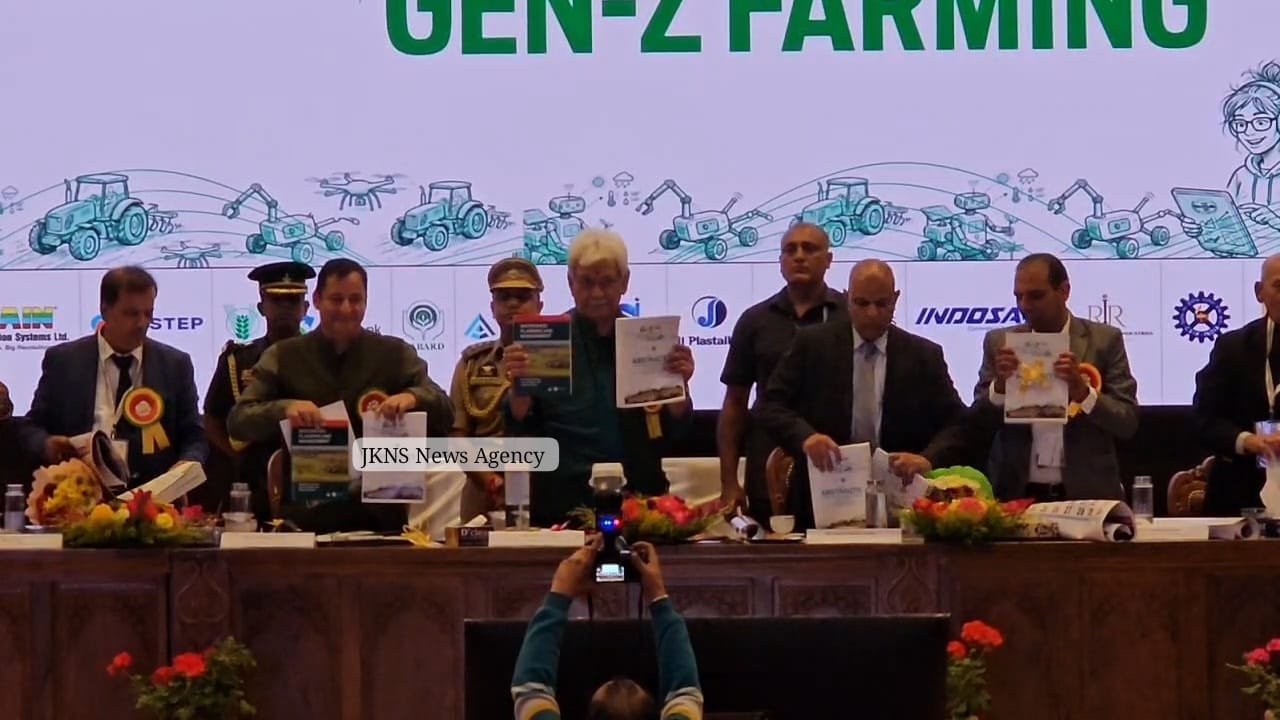
Addressing an Internal Symposium on AI and Robotics at SKUAST-Kashmir, as per news agency JKNS, Lieutenant Governor Sinha said the agriculture sector was moving beyond traditional food-security challenges and preparing to lead through innovation, technology and modern engineering interventions.
Sinha said Jammu and Kashmir provides an appropriate platform to deliberate on these issues, noting that the region’s agricultural landscape has historically required farmers to overcome difficult conditions and make productive use of limited resources.
Recalling the challenges faced by India during the 1960s, he said the country was then confronted with food shortages and depended heavily on imports. Agricultural scientists, experts and engineers, through mechanisation and other interventions, played an important role in transforming the sector and contributing to the Green Revolution.
He said agricultural engineering must now focus on practical and urgent challenges, including increasing production with fewer resources, reducing post-harvest losses and protecting agriculture and horticulture from the impact of climate change.
“These challenges cannot be solved with the instruments of the past. We need new tools,” Sinha said, emphasising the need for modern technologies and innovative approaches.
The Lieutenant Governor stressed that the rapid changes in Artificial Intelligence in recent months have increased global interest and concerns, making it important to ensure that AI and human intelligence work together rather than being viewed separately.
He also underlined the importance of innovations that benefit a wider section of society, particularly women, saying that women-led engineering innovation should translate into tangible outcomes rather than remain merely a subject of discussion.
Referring to the participation of women in agriculture, Sinha cited labour force data indicating that a significant proportion of rural women are engaged in agricultural activities, while many workers in the sector continue to work without regular wages.
He called upon agricultural engineers, scientists and institutions to develop technologies and solutions that are inclusive, resource-efficient and capable of making farming more sustainable in the face of changing climatic conditions. (JKNS)