

Peerzada Sayeed / Mohammad Hafeez Mir

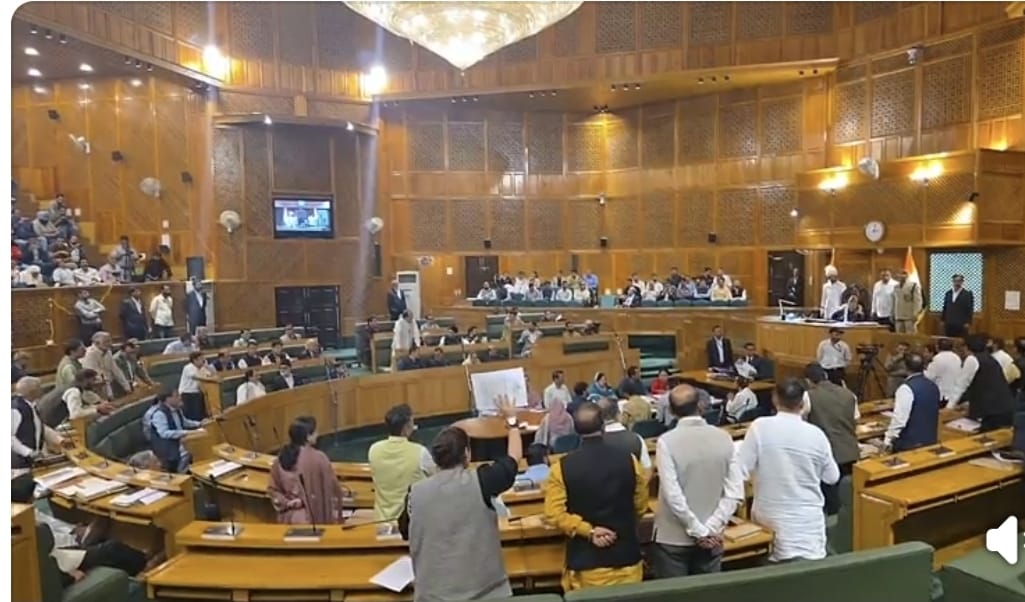
Karnah, Oct 1 (JKNS): Another session of the Jammu and Kashmir Legislative Assembly has come to an end. Yet an important question remains: what, ultimately, did the common man gain from this session? The serious and result-oriented discussion on public issues that people had expected was largely missing.
Over the past two years, watching the proceedings of the Assembly has, on several occasions, given the impression that political confrontation has taken precedence over public issues. Differences of opinion are an essential feature of democracy, but when disagreement turns into personal confrontation, disruptions, and politics aimed at putting one another down, it harms both parliamentary traditions and the dignity of the House.
The youth of Jammu and Kashmir are still waiting for employment opportunities. Vacancies in government departments, limited opportunities in the private sector, rising prices, difficulties faced by businesses, and growing uncertainty about the future have left an entire generation deeply concerned. In such circumstances, people expect the Assembly not to remain confined to statements and political debates, but to come forward with clear targets, defined timelines, and practical policies for generating employment.
However, if the energy of the House is instead consumed largely by political rhetoric, it is natural for people to ask: the representatives whom they elected to raise their concerns in the Assembly—when and how will their problems actually be resolved?
At the same time, the government introduced a Media Regulation Bill, raising serious questions about press freedom and the space available for critical voices. The question that arises is whether such legislation could restrict independent journalism and critical scrutiny. There is concern that instead of addressing its shortcomings, the government may be seeking to limit the voices that question its performance.
The same political establishment that, while in opposition, repeatedly raised concerns about threats to democracy and freedom of expression must also ensure that these principles remain protected when it is in power. This raises questions about the consistency of its approach to democratic freedoms.
In a democracy, government accountability does not take place only inside the Assembly. A free and responsible press also plays an important role as a bridge between the people and the government. Journalists question those in power, analyse government policies, point out shortcomings, and carry the grievances of ordinary citizens to the corridors of power.
If a government wants to ensure that it is not questioned, that its policies are not criticised, and that its performance is not scrutinised, such an approach raises legitimate concerns about the spirit of a democratic system. Governments come and go, but institutions and democratic principles must endure.
Whether it is the National Conference, any other political party, or any government that may come to power in the future, one principle should apply equally to everyone: the freedom a political party demands for itself while in opposition should also be extended to others when it comes to power. If disagreement is considered a symbol of democracy while in opposition, why should the same disagreement become uncomfortable once a party is in government?
Today, the youth of Jammu and Kashmir are demanding employment; people want basic public services; the business community is looking for a conducive environment; and journalists want their right to ask questions freely to be protected.
The primary purpose of the Assembly should be to hold serious discussions on these issues and ensure that practical measures follow those discussions. Democracy is not merely about casting votes. Democracy is also about asking questions, disagreeing, demanding answers, and listening to those answers.
If those in power begin to consider themselves beyond questioning, the very purpose for which democratic institutions and legislatures exist becomes weakened.
The people of Jammu and Kashmir do not need noise—they need solutions. They need policies rather than slogans. They need employment rather than political blame games. And above all, they need a democratic environment where questioning the government is not treated as an offence.
That is what the people expect from their elected representatives—and that is what a functioning democracy should deliver. (JKNS)