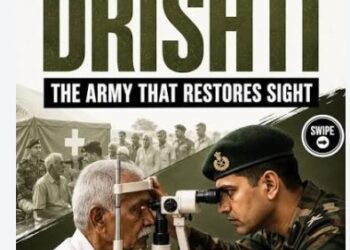


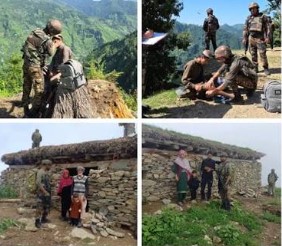
In the remote valleys and ridgelines of Kashmir, especially along the Line of Control in places like Tangdhar, Karnah and other high-altitude pockets, ordinary people farmers, elderly villagers, Gujjar and Pahari families often live with treatable eye problems for years. Mature cataracts slowly take away their ability to work, move safely, or even recognise family members. For many of these residents, the nearest proper hospital lies across difficult mountain passes, poor roads and long, expensive journeys that the old and weak simply cannot undertake.
This is where the Indian Army’s medical camps step in. Under Operation Sadbhavana and related outreach programmes, Army medical teams have been organising regular screening and treatment camps that reach exactly those villages where civilian health services struggle to arrive regularly. Screening drives held through the summer identified hundreds of people needing help.
The focus remains practical and people-centred. Elderly residents who had almost given up hope of clear sight are being brought in, examined and operated upon without the burden of long-distance travel. Many of these patients come from hamlets where civil administration medical facilities either do not exist in strength or cannot maintain regular specialist services because of terrain, weather and isolation. In such places the Army’s forward medical infrastructure and willingness to move teams and equipment become the only realistic option for timely care.
These camps are not limited to eye work. They routinely combine general medical check-ups, dental care and even blood donation drives, turning a single deployment into broad community support. The pattern is consistent across Chinar Corps areas: where civilian systems find it hard to sustain continuous presence, the Army’s medical units fill the gap for the common public soldiers’ families, local civilians, veterans and ordinary villagers alike.
Earlier large-scale efforts, such as the November 2025 camp at Command Hospital Udhampur that screened over 2,000 people and performed more than 400 procedures, proved the model works. The current activity in the Kashmir Valley simply takes the same approach deeper into the most inaccessible pockets, using lessons from both big camps and smaller forward pilots.
The real measure of success is straightforward. An elderly person who can once again see the faces of grandchildren, walk without fear, or resume daily chores has received more than medical treatment. In regions where distance and difficulty keep civil medical help away for long stretches, the Army’s camps have become a reliable hand of support for ordinary Kashmiris. By repeatedly bringing specialised care to the doorstep of those who need it most, these medical outreach efforts continue to restore both vision and a measure of dignity to people living in Kashmir’s remotest corners.