




The dawn over the Pir Panjal range does not merely illuminate a landscape; it dissolves boundaries between earth and sky, bathing the valley of Kashmir in a golden light that has for centuries beckoned mystics, poets and seekers. Within this crucible of snow clad peaks, geography is a sacred map where the human spirit seeks communion with the divine. In global discourse, this region has often been reduced to geopolitical friction and has been portrayed through the polarising imagery of conflict. Yet, beneath this surface lies an enduring truth, a social fabric woven from shared devotion, interfaith fraternity and an indigenous philosophy of coexistence known as Kashmiriyat. This cultural synthesis is an active, breathing ethic that finds its most vibrant expression in the sacred journeys of pilgrims. In these high altitude sanctuaries, faith becomes a bridge rather than a barrier, transforming the reception of the traveller into a sublime ritual of mutual respect and communal healing.
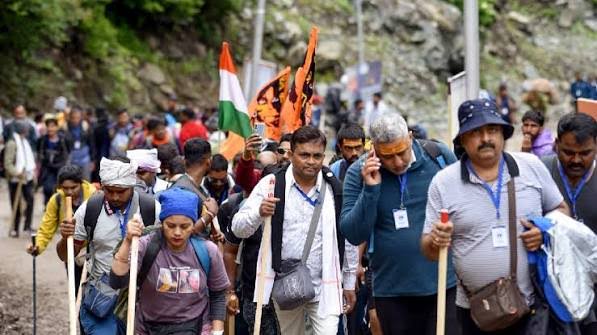
At the very heart of this collaborative spiritual ecosystem is the annual Shri Amarnath Ji Yatra, a monumental pilgrimage that draws hundreds of thousands of Hindu devotees to a cave shrine nested high in the southern Himalayas. While clearing trails buried under deep winter snow and securing passages across rugged cliffs requires immense coordination, the true soul of the pilgrimage resides in the hands of the local Kashmiri Muslim community. Local pony handlers, palanquin bearers and guides form the vital thread of the journey. Local pony vendors accompany the ailing pilgrims on foot across a gruelling thirty two kilometre mountain loop, navigating oxygen depleted heights and sudden storms with quiet fortitude. For these local service providers, the Yatra is far more than a source of seasonal income; it is a spiritual calling, a manifestation of the sacred duty of hospitality. When pony handlers guide devotees along slippery cliffs, their cautionary words blend seamlessly with the pilgrims chanting praises to the deity. This daily, unscripted partnership reveals an invisible bond of trust where the safety of the seeker is guarded by the faith of the guide, demonstrating that humanity consistently rises above all religious distinctions.
This ethic of protective compassion is not confined to the routine paths of the trek; it shines with the greatest clarity when tested by sudden crisis. When a catastrophic cloudburst in July 2022 triggered devastating flash floods near the holy cave, washing away encampments and community kitchens, local Muslim service providers did not flee to save themselves. They acted as immediate first responders, digging through mud and debris in near total darkness to pull stranded pilgrims to safety before official rescue teams could arrive. Another profound testament to communal resilience occurred during the turbulent summer of 2016 in Bijbehara. Following civil unrest, a minibus carrying Amarnath pilgrims met with a collision, injuring dozens. Despite profound grief and curfew restrictions, local Muslims rushed from their homes to rescue the bleeding pilgrims. They smashed the windows of the mangled bus, transported the injured to local hospitals and organised teams of youth to donate blood. Such moments of spontaneous, life saving empathy illustrate that when human lives are at stake, the deep seated values of brotherhood in the valley immediately override the artificial boundaries of political or religious polarisation.
While the Amarnath Yatra showcases this harmony on a grand Himalayan stage, a more intimate and deeply emotional homecoming occurs annually during the Jyeshtha Ashtami festival at the Kheer Bhawani temple in Tulmulla. Dedicated to the Goddess Ragnya Devi, this temple, centred around a sacred spring whose waters are believed to reflect the destiny of the valley, is the spiritual anchor of the Kashmiri Pandit community. Following the painful displacement of the Pandits in the early 1990s, the physical and spiritual preservation of this sanctuary was quietly assumed by the local Muslim residents of Tulmulla. In the summer of 2026, an unprecedented number of displaced Pandits returned to the temple, greeted by a valley described by many as free of fear. What unfolded was not merely a religious festival but a profound exercise in communal healing. Local Muslims welcomed the returning families with tearful embraces, opening their homes to accommodate guests and establishing stalls to distribute water, milk and flowers for the temple rituals. These touching scenes of childhood friends reuniting demonstrate that the social fabric of the valley remains incomplete without its Pandit brothers and sisters and that the language of shared memory can bridge decades of separation.
The roots of this syncretic culture are anchored in a rich philosophical heritage that dates back to the 14th century, when Sufism first blended with the indigenous spiritual traditions of Kashmir. This union birthed the unique Rishi order of Sufism, founded by the patron saint of the valley, Sheikh Noor-ud-Din Noorani, affectionately known as Nund Rishi. His spiritual vision was shaped by the Shaivite mystic poetess Lalleshwari, whose verses preached the rejection of rigid orthodoxy, caste hierarchies and external rituals in favour of inner purity and universal love. The Rishi order adopted practices of extreme simplicity, vegetarianism and environmental conservation, establishing a philosophy that belonged to all Kashmiris irrespective of their creed. The magnificent wooden shrine of Charar-e-Sharief, where Nund Rishi is laid to rest, remains a sanctuary where both Muslims and Hindus gather to seek solace and celebrate universal brotherhood. Similarly, the sacred landscape of Srinagar reflects this spatial syncretism, where the majestic hill of Hari Parbat concurrently hosts the Hindu Sharika Devi Temple, the Muslim Dargah of Makhdoom Sahib and the Sikh Gurdwara Chatti Patshahi, standing together as a visual symphony of pluralism. Nearby, the ancient Shankaracharya Temple overlooks the serene waters of Dal Lake, its stone architecture preserved by various dynastic rulers over millennia, while the Hazratbal Shrine houses a sacred relic of the Prophet Muhammad, drawing respect from visitors of all faiths.
These sacred spaces and the pilgrimages that animate them are not mere cultural curiosities; they are the very sanctuaries where the soul of Kashmir is preserved and renewed. The interactions between local communities and visiting pilgrims prove that faith, when understood in its deepest, most mystical sense, does not construct walls of exclusion but rather builds enduring bridges of empathy, mutual respect and profound human connection. In an era where public discourse is too often dominated by division, the quiet, everyday harmony of the valley stands as a luminous reminder that our shared humanity is the most sacred sanctuary of all, a temple built not of stone, but of love, trust and unyielding grace.

Reaching the Unreached: How Army Medical Camps Deliver Vital Healthcare Across Kashmir’s Districts
Across the varied landscape of Jammu and Kashmir from the border villages of the north to the high meadows and...
Read more