

Kashmir gets its name from Kashyap Rishi. According to the old story, the whole valley was once a large lake called Satisar. Rishi Kashyap drained that lake and made the land suitable for people to live. Because of this, the name Kashyap-Mir came into use, which later became Kashmir.
Historically, Kashmir has always been an important centre of learning and culture. Many Hindu and Buddhist scholars lived here and contributed to knowledge. One major example is Kalhana, who wrote Rajatarangini, giving a detailed account of Kashmir’s rulers. Over time, different rulers came. Initially, Hindu kings ruled, then Buddhism spread. In the 14th century, Islam came to Kashmir and slowly a mixed culture developed. Later, the Mughals ruled and they loved Kashmir for its beauty. After them came Afghans, then Sikhs and then Dogra rulers under the British. During British time, Jammu and Kashmir was a princely state under Maharaja Hari Singh.


Kashmiri art is not just about decoration or selling items. It is directly connected to the life of the people here. If you actually observe closely, every craft tells a story about history, survival and daily life. Kashmir has seen difficult times again and again, yet art here never stopped. That itself shows the level of discipline and mental strength of the people. Art here is not just skill, it is identity. Even though influences came from Persia, Central Asia and India, Kashmir has developed its own distinct style, which can be easily recognised as Kashmiri work anywhere for its fine, balanced detailing and design.
In Kashmir, art is not learned in classrooms or through degrees. Instead, it is learned in a very practical way. A young person starts by observing a master artisan, usually a family member. They keep watching, helping and slowly start doing small tasks. Over years, they become skilled.
This system has been in place for generations, which is why the originality of these crafts remains intact. For a Kashmiri artisan, this is not just a job. It is a matter of pride. They don’t rush their work just to finish it. Instead, they focus on perfection, even if it takes more time.
One of the most famous Kashmiri crafts is the Pashmina shawl. These shawls are made from very fine wool from goats living at high altitudes. The process is completely manual. First, the wool is cleaned, then spun into thread and finally woven into shawls. This itself takes a lot of time and patience. The designs are usually inspired by nature, flowers, leaves and traditional motifs. A single shawl can take months or even years to complete. That is why original Pashmina is so valuable.
Kashida is another important art form. It is basically hand embroidery, but what makes it special is its simplicity. Unlike other embroidery styles, Kashida does not try to overload designs. Instead, it focuses on clean lines and balanced patterns. Most designs are inspired by nature, chinar leaves, lotus flowers, birds. It is mostly done on shawls, cushion covers and traditional dresses like pheran. It reflects a mindset where beauty is subtle, not loud.
Kashmir is also known for walnut wood carving. The wood available here is strong and suitable for detailed carving. Artisans make furniture, boxes, panels and decorative items. The designs are usually floral or geometric. As a result, the craft clearly reflects discipline.
Papier mache is an art that came from Persia but became an important part of Kashmiri culture. In this, paper pulp is used to create objects like boxes, vases and trays. Once the base is ready, it is painted with very fine brushes. The designs include flowers, birds and traditional patterns, often with gold detailing. The level of detail is very high, showing the artist’s skill.
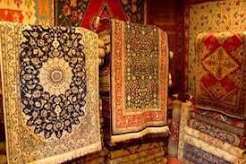
Namda is a type of rug made by pressing wool together and then adding embroidery. Gabba is made by stitching old woollen blankets and decorating them. These are used to keep houses warm during winters. In this way, the idea is simple use whatever is available and create something useful and good-looking.
Art in Kashmir is not limited to physical objects. Music and dance are also very important. Traditional music often has a spiritual tone. Instruments like the Santoor give a very calm and unique sound. During festivals, people perform dances like Rouf. In this way, these dances bring people together and help in passing culture to the next generation.
Kashmiri arts are not just items to buy. They are living traditions shaped by history, environment and hard work. They represent the strength and creativity of the people. Even after facing so many challenges, these traditions are still alive. Therefore, protecting these arts is not just about preserving culture. It is about respecting the dignity and effort of the people who create them. As long as these crafts continue, the true spirit of Kashmir will remain strong.