


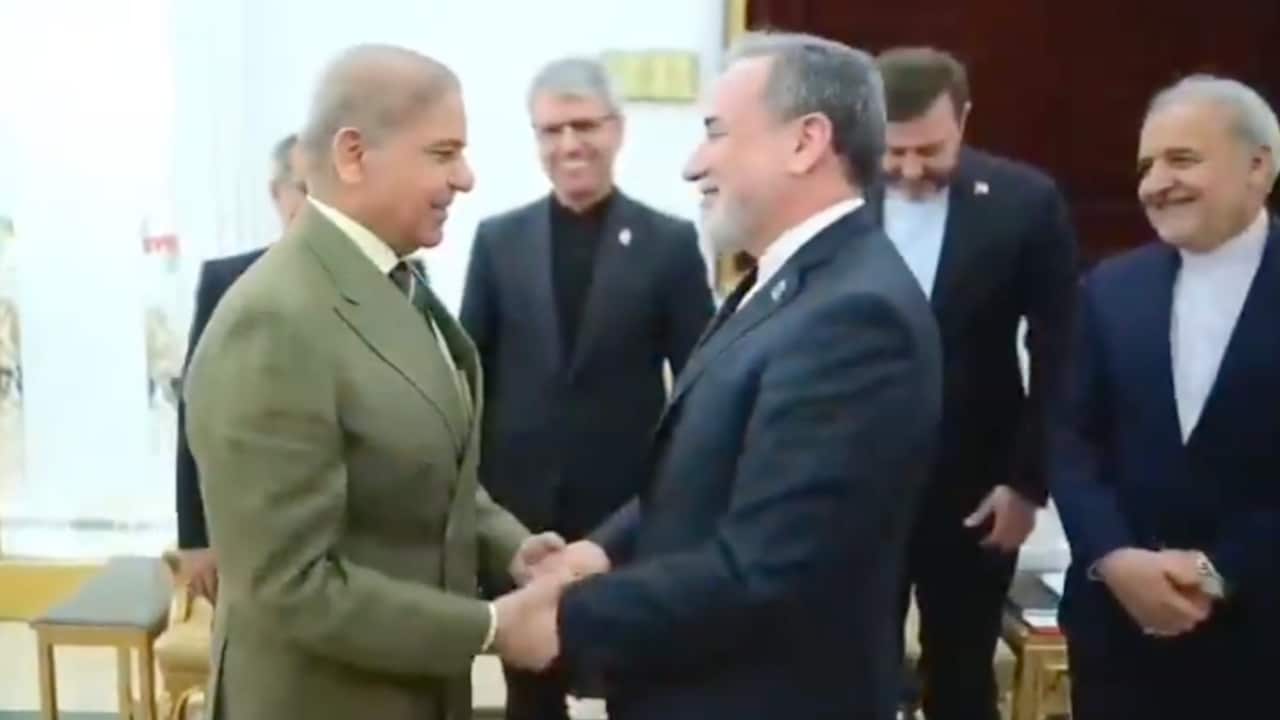
Iran has grown increasingly skeptical about whether Pakistan can serve as a genuine neutral party in the ongoing US-Iran negotiations. Iranian state media and parliamentarians have accused Field Marshal Asim Munir — Pakistan’s army chief, promoted to that rank after the India-Pakistan conflict of May 2025 — of playing a “double game,” while some Iranian MPs have called Pakistan an “unfit mediator.”
Officials in Tehran have alleged that Iran’s proposals were not adequately conveyed to Washington, while US demands received priority treatment. Taken alongside a series of other developments, these concerns have hardened into a broader pattern of suspicion toward Islamabad.

The foundational grievance traces back to September 2025. On the 17th of that month, Pakistan and Saudi Arabia formalized a Strategic Mutual Defence Agreement (SMDA), signed at Al-Yamamah Palace in Riyadh by Crown Prince Mohammed bin Salman and Prime Minister Shehbaz Sharif. The pact’s core clause stipulates that any aggression against either country shall be treated as aggression against both — language that analysts have compared to NATO’s Article 5, though independent experts have cautioned that the agreement functions more as a political signal of solidarity than an unconditional military guarantee.
Notably, Iranian President Masoud Pezeshkian initially welcomed the agreement at the UN General Assembly as the foundation of a broader regional security framework. That welcome, however, did not dispel Tehran’s deeper unease.
Seven months later, Pakistan was hosting the Islamabad Talks — the first direct, high-level engagement between the United States and Iran since 1979 — and presenting itself as a neutral mediator.
The two-week ceasefire brokered by Pakistan on April 8, 2026 gave the talks their opening, but negotiations quickly ran into trouble. Iran alleged it had received informal assurances, through channels involving Munir, that the US naval blockade of the Strait of Hormuz would be addressed before talks resumed. When Trump extended the ceasefire without lifting the blockade, Tehran concluded that Pakistan had either misread Washington’s intentions or made promises it could not keep.
Tehran had not forgotten what was signed in Riyadh — and this episode deepened the perception that Pakistan’s influence runs in one direction.
The SMDA arrived against the backdrop of a rivalry between Saudi Arabia and Iran stretching back decades, expressed through proxy conflicts in Yemen, Syria, and Lebanon, through competing claims to Islamic authority, and through sustained intelligence competition across the region. Saudi Arabia hosts significant American military assets; it has backed movements that Iran considers adversarial.
The two nations have been on opposing sides of nearly every major regional conflict of the past generation. Pakistan’s formal commitment to Saudi Arabia’s collective defence is, from Tehran’s perspective, not a peripheral bilateral arrangement — it is an institutional alignment with Iran’s most consequential regional adversary, now carrying legal weight and codified obligations.
Pakistan’s relationship with Saudi Arabia predates the 2025 agreement by decades. Pakistani soldiers have served in the kingdom in large numbers, with estimates suggesting Pakistan has trained between 8,000 and 10,000 Saudi military personnel over the years. Joint exercises, defence procurement, and the sustained flow of Pakistani military personnel through Saudi institutions have created an integration that is more than contractual.
What the SMDA did was formalize what was previously understood — converting a standing alignment into a signed obligation. Iranian officials have cited that codification specifically: an informal relationship can be stepped back from; a collective security clause in a ratified agreement cannot.
Tehran has pointed to other signals it regards as telling. The collapse of the planned second round of Islamabad talks in late April 2026 — after Trump cancelled the US delegation’s trip at the last moment — left Iran further convinced that Pakistan lacked either the leverage or the will to push back on Washington.
Iranian state media characterized Munir’s mediation as tilted, noting that when he met Iranian officials, Iran’s core concerns about the Hormuz blockade remained unaddressed, while US demands regarding nuclear enrichment were consistently placed at the center of discussions.
Inside Pakistan, the spillover of regional tensions has added another layer of difficulty. Protests erupted in Karachi in March 2026 following reports of the killing of Iranian Supreme Leader Ali Khamenei — a sign of how regional developments reverberate domestically and complicate Islamabad’s balancing act. Pakistan has had to maintain solidarity with Riyadh under its mutual defence pact while preserving enough standing with Tehran to keep diplomatic channels open, all while sharing a nearly 1,000-kilometer border with Iran.
Pakistan’s structural limitation as a mediator is, by now, widely acknowledged: it can facilitate communication between Washington and Tehran, but it cannot enforce or guarantee outcomes. Effective mediation requires not just access to both parties but the credibility to bridge their differences with workable proposals. Critics — including some within Iran — argue that Pakistan has instead pressed Tehran to accommodate US positions, undermining its claim to impartiality. Iranian MP Ebrahim Rezaei captured this sentiment succinctly: Pakistan, he said, is “a good friend and neighbour,” but not a suitable intermediary.
Iran’s unease is less a reaction to any single act of bad faith and more a response to what it reads as a structural pattern: a country with a formal defence pact with Saudi Arabia, close personal ties between its leadership and Donald Trump, and a record of facilitating US proposals to Tehran — presenting itself as a neutral broker. That framing is difficult to sustain, and Tehran has said so plainly. Whether Pakistan retains enough trust from both sides to keep the diplomatic track alive remains the central open question.