


A Case Study in Democratic Access
India’s democracy rests on the principle that every citizen has the right to vote. Yet, sometimes the very systems designed to enable participation create barriers for those who need inclusion the most.
Consider the case of a senior citizen couple who lived abroad for decades. Having now returned to India, they have completed all formalities to establish residency such as banking documentation, address verification, and identity proofs. With renewed hope, they go online to register as voters through Form 6 on the Election Commission’s portal https://voters.eci.gov.in.
The Journey Through Form 6
* From Section A to I, every requirement is met: proof of residence, age, identity, and supporting documents.
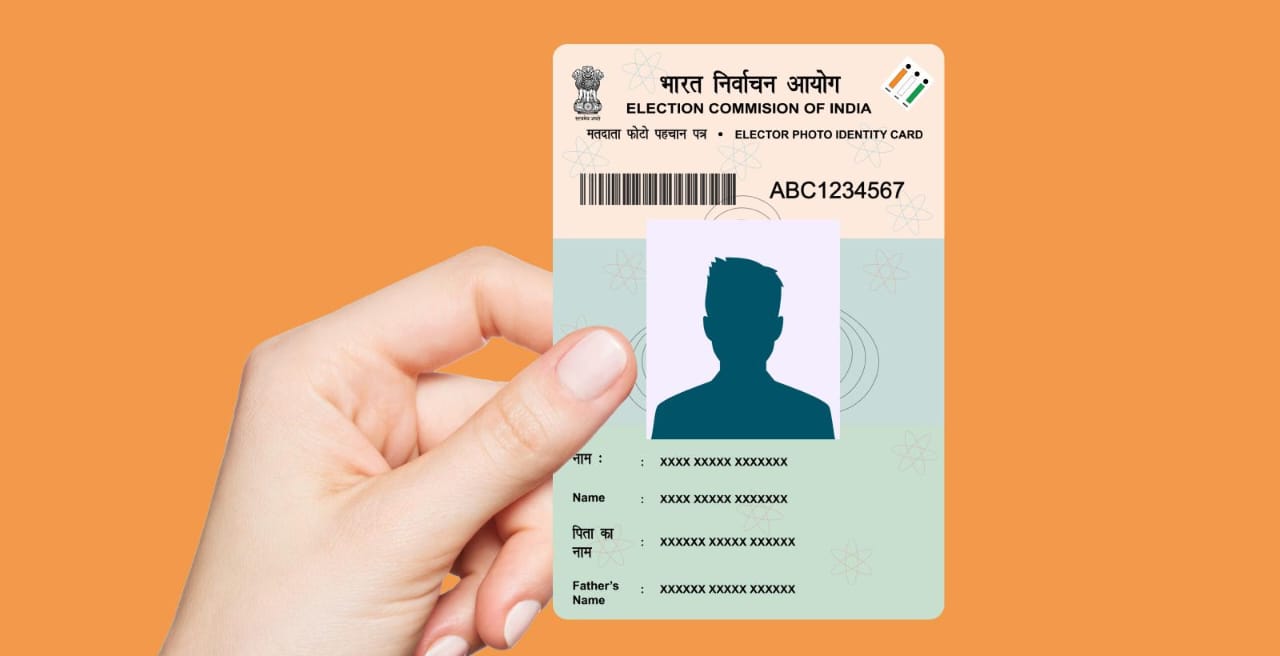
* But at Section J, the form asks for EPIC numbers of father, mother, and spouse.
* Here lies the impasse:
* His parents passed away in the early 1990s, before EPIC numbers were introduced in 1993. They never had voter ID cards with EPIC numbers.
* His wife, like him, has never held an EPIC number, since both lived abroad.
* Without these details, the form refuses to proceed further.
The Dead End
The citizen calls the Booth Level Officer (BLO), who visits the society for voter verification. Yet even she admits there is no clear solution within the current digital framework. The system, designed for continuity, fails to accommodate first-time registrants returning from abroad or those whose parents never had EPIC numbers.
The Larger Issue
This is not just one man’s problem—it is a systemic gap.
* Senior citizens returning from abroad face exclusion despite fulfilling all residency requirements.
* The digital form assumes every applicant’s family has EPIC numbers, ignoring historical realities.
* The absence of a bypass option or explanatory field leaves genuine applicants stranded.
What Should Be Done
1. Election Commission of India (ECI) must introduce a “Not Applicable” option in Section J for cases where parents are deceased or spouse is a first-time applicant.
2. Booth Level Officers (BLOs) should be empowered with manual override authority to accept such applications after physical verification.
3. Senior citizens should have access to a dedicated helpdesk for voter registration, ensuring they are not digitally excluded.
Broader Democratic Concern
I am sure that there would be many such cases across a country as populated as India. This highlights a deeper issue: when genuine citizens are unable to register due to technical rigidity, it says a lot about the fragility of votes in a democracy. Every missed voter is not just an individual excluded, but a voice silenced in the collective decision-making of the nation
A Plea for Reform
Democracy thrives when every citizen can participate. If a senior citizen, with all documents in order, cannot register because of a technical rigidity, then the system is failing its purpose.
The right to vote is not conditional on family’s EPIC numbers; it is a constitutional entitlement.
I therefore request urgent action to ensure that every citizen, regardless of historical or procedural gaps, can exercise their fundamental right to vote in the upcoming elections.
Footnote: *The names of the senior citizens have not been mentioned in this article to safeguard them from any potential online trolling or harassment.