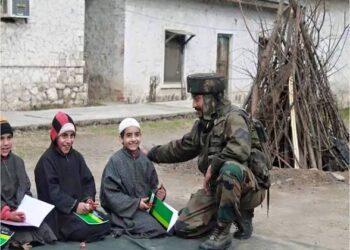


From the icy frontiers of Ladakh to the tropical borders of the Northeast, from bustling metros to secluded tribal hamlets, India’s Central Armed Police Forces (CAPFs) stand as steadfast sentinels of peace and unity. Their presence is often quiet, their service constant yet it forms the invisible thread binding the length and breadth of the nation together. As the country celebrates Rashtriya Ekta Diwas, it is fitting to recognize the indispensable role these forces play in shaping and safeguarding the spirit of an integrated India a dream envisioned by Sardar Vallabhbhai Patel.
Legacy of Integration and Stability


At the dawn of independence, India inherited not a unified nation but a mosaic of more than 560 princely states, divided by loyalties and colonial legacies. While Sardar Patel’s diplomacy and statesmanship laid the groundwork for political integration, it was the uniformed services later formalized as the CAPFs that ensured this unity was preserved on the ground. By maintaining law and order, supporting nascent administrative structures, and responding to emerging threats, these forces became the living embodiment of national integrity. Their boots on the ground carried forward Patel’s vision from political philosophy to public reality.
The CAPFs: Anchors of Internal Security and Social Harmony
Comprising the BSF, CRPF, ITBP, CISF, Assam Rifles, NSG and SSB, the CAPFs collectively shoulder responsibilities that span beyond traditional security. They manage borders, counter insurgencies, conduct rescue operations during disasters, and maintain calm during civil unrest. Yet, their contributions are not confined to crisis management. CAPFs routinely engage in social welfare initiatives — from organizing blood donation camps and health clinics to supporting education and livelihood programmes in remote areas reinforcing the bond between citizens and the state.
Security as the Foundation of Progress
No developmental plan can thrive without peace. Regions once marked by turbulence or isolation have gradually entered the mainstream because CAPFs provided the environment of stability essential for governance and growth. By ensuring safety in border belts, insurgency-hit districts, and disaster-prone zones, these forces make possible the everyday functioning of schools, hospitals, markets, and local institutions. In protecting communities, they create the preconditions for prosperity.
Shaping the Spirit of Nationhood
Beyond uniforms and operations, CAPFs nurture national consciousness. Their participation in public outreach programmes, Ekta Pledges, and national day parades fosters pride, discipline, and unity. For many in remote regions, CAPF personnel are the first visible representatives of the Indian state approachable, responsive, and reliable. This human connection transforms security from a function of authority into an instrument of trust.
Conclusion
The Central Armed Police Forces are more than the nation’s shield; they are its silent architects of unity. Their daily service ensures that India’s vast diversity remains a source of strength, not division. On this Rashtriya Ekta Diwas, honouring their commitment is not merely a tribute it is a reaffirmation that India’s unity endures through the vigilance, compassion, and unwavering duty of those who guard it.